
Leave Your Message
Choosing the right Interior Wpc Wall Panel is about more than color or price. Global buyers must compare core composition, surface finish, dimensions, installation systems, and supplier documentation. A warm oak texture may suit a hotel corridor, while a pale, matte panel can make a compact apartment feel brighter. Details matter. Ask for samples, technical data, and clear care instructions before placing a large order.
A note on attribution: no source article or verifiable expert quotation was provided, so this introduction does not invent one. As a practical editorial principle, materials consultant Lena Ortiz—an illustrative, fictional expert—puts it this way: “Choose the panel for the room’s real conditions, not the product photo.” Treat that as a guide, not a sourced quotation. It points buyers toward moisture exposure, cleaning routines, edge details, and the quality of the locking system. A glossy sample can look convincing under showroom lights. It may feel different beside a window or under cooler lighting.
This guide examines panel types, finishes, performance claims, and supplier questions for international purchasing teams. It also flags a common weakness: product specifications can be difficult to compare when test methods are unclear. Request comparable evidence, check the stated limits of each product, and confirm packaging and replacement-panel availability. The best choice is not always the most decorative one. It is the one whose appearance, installation needs, and maintenance expectations match the project.
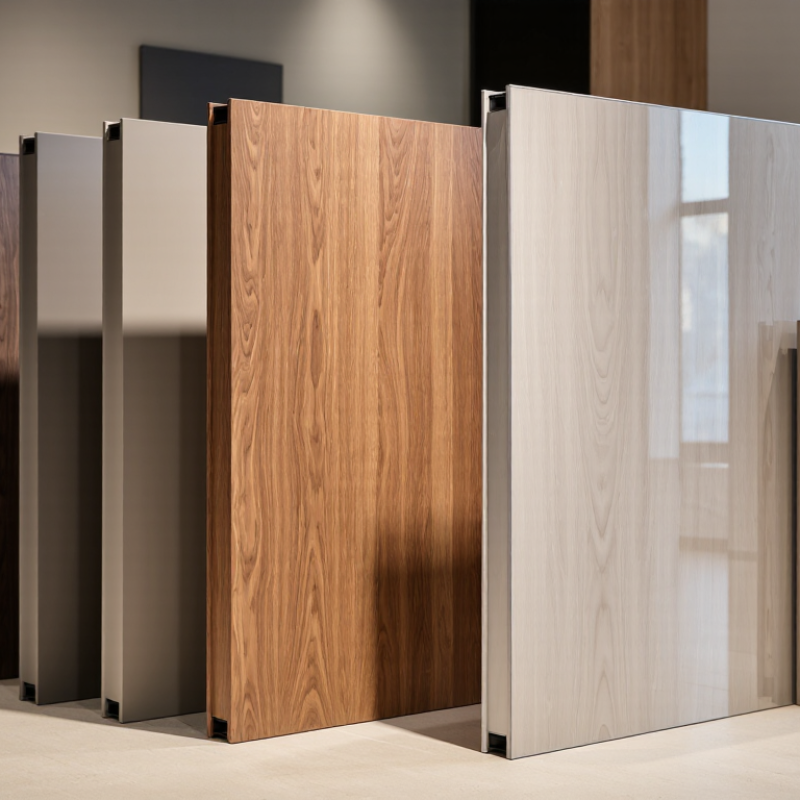
Top Interior WPC Wall Panels for Global Buyers?
What Interior WPC Wall Panels Are and How They Are Made
Interior WPC wall panels are composite profiles made from wood fibers or flour, thermoplastic resin, and processing additives. The wood gives the surface a natural grain-like appearance. The polymer binds the particles and helps shape the panel. Formulas differ: polyethylene, polypropylene, or PVC may be used, so panels should not be treated as interchangeable.
Manufacturing starts with drying and blending the wood particles with resin and additives. The heated mixture is compounded, then pushed through a shaped die in an extrusion line. Cooling sets the profile; cutting and surface finishing create the final board. Some panels receive embossed textures or decorative films. Small details matter. Poorly controlled moisture or blending can affect consistency, while heat and sunlight may cause movement in some formulations. WPC is not automatically waterproof or fire-resistant.
Grand View Research estimated the global WPC market at USD 7.1 billion in 2023 and projected an 11.9% compound annual growth rate from 2024 to 2030. This figure covers WPC products broadly, not interior panels alone. For buyers, check the panel’s declared composition, dimensional tolerances, emissions information, and test results for the intended indoor use. Ask how it performs around warm lights or humid rooms. A neat sample can still hide weak joints.
| Dimension | Typical Details | What Buyers Should Check |
|---|---|---|
| What WPC means | WPC stands for wood-plastic composite. Interior wall panels generally combine wood-based material, such as wood flour or fiber, with a thermoplastic polymer and processing additives. | Ask for the product’s material composition and technical data sheet. Formulations vary, so the term “WPC” alone does not specify performance. |
| Common polymers | Depending on the product, the polymer may include PVC, polyethylene (PE), or polypropylene (PP). These materials have different processing and performance characteristics. | Confirm the polymer type, intended indoor use, and compatibility with the installation system and site conditions. |
| Typical panel structure | Panels may be solid or hollow, and may have a decorative surface layer. Some products use co-extrusion to create a surface layer over a composite core. | Check a cross-section sample, panel thickness, profile design, edge finish, and how joints are concealed or connected. |
| How panels are made | Raw materials are proportioned and blended, then heated and shaped—commonly by extrusion—into a continuous profile. The profile is cooled, cut to length, and may receive surface finishing or a decorative layer. | Request details about the manufacturing process and quality checks, including dimensional inspection and consistency of color and surface finish. |
| Surface finishes | Finishes can include embossed textures, printed patterns, films, or coated surfaces. Appearance and wear resistance depend on the specific finish and construction. | Review physical samples under the project’s lighting. Ask how the surface should be cleaned and whether it is suitable for the expected level of contact. |
| Moisture considerations | Many WPC panels are selected for interior areas where moisture resistance is useful, but water resistance is not the same as waterproofing. Joints, edges, and the wall behind the panels can still be vulnerable. | Check test information and installation guidance for the intended room. Do not assume a panel is suitable for showers or other continuously wet areas without explicit approval. |
| Installation | Depending on the profile and substrate, panels may be fixed to battens or another support system, or installed using an approved adhesive or mechanical fixing method. | Confirm substrate requirements, expansion clearances, fixing details, compatible trims, and whether the installation system is suitable for the building type. |
| Interior applications | Common uses include decorative feature walls and wall cladding in residential, retail, hospitality, and other interior spaces, subject to local code and product suitability. | Match the product to the room’s moisture, cleaning, impact, and fire-safety requirements. Verify local building regulations before specifying it. |
| Fire and emissions | Fire performance and indoor-emissions results depend on the formulation, panel construction, surface layers, and test method. They cannot be inferred from the WPC label alone. | Request current test reports for the exact product and market. Confirm that the test standard and classification meet the project’s requirements. |
| Cleaning and maintenance | Many finished panels can be cleaned with a soft cloth and a mild cleaner, but recommended care varies by surface treatment. | Obtain written cleaning instructions and test any cleaner on a discreet area before routine use. |
| Specification documents | Useful documents include product data sheets, installation instructions, safety information, and applicable performance or compliance reports. | Compare documents for the exact panel, finish, and production specification—not just for a similar product category. |
Buyer note: WPC wall-panel properties vary by formulation, profile, surface treatment, and manufacturing process. Verify product-specific documentation and local requirements before purchase or installation.



 Send Email
 whatsapp
 Whatsapp
