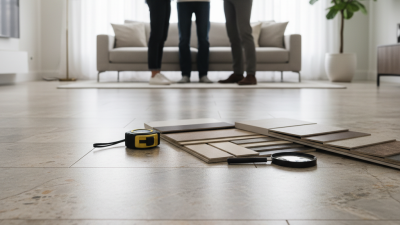
Buying Oak SPC Flooring online can feel simple: choose a color, compare prices, and click purchase. The reality is less tidy. Screen colors shift between phones, room lighting changes oak tones, and product photos may hide surface texture. A sample beside your white cabinets may look warmer than expected. Sometimes, the “perfect” listing disappoints in person.
Brett Miller, a respected flooring industry educator, says, “A flooring sample is only a starting point; the installation environment tells the fuller story.” That reminder matters when evaluating Oak SPC Flooring from a distant supplier. Buyers should examine wear-layer thickness, core construction, locking profiles, plank dimensions, underlay requirements, warranty language, and independent reviews. Delivery terms matter too. A low price can lose its appeal after oversized cartons arrive damaged.
These seven tips focus on practical checks before payment. They explain how to read technical specifications, request physical samples, compare total costs, and assess seller reliability. You will also see why room measurements deserve more care than a quick estimate. Measure twice. Then question the result.
No online guide removes every risk. Even experienced buyers can overlook trim compatibility or subfloor preparation. That is the uncomfortable part. Still, careful research can reduce expensive surprises and help you choose flooring that suits your room, budget, and daily use.
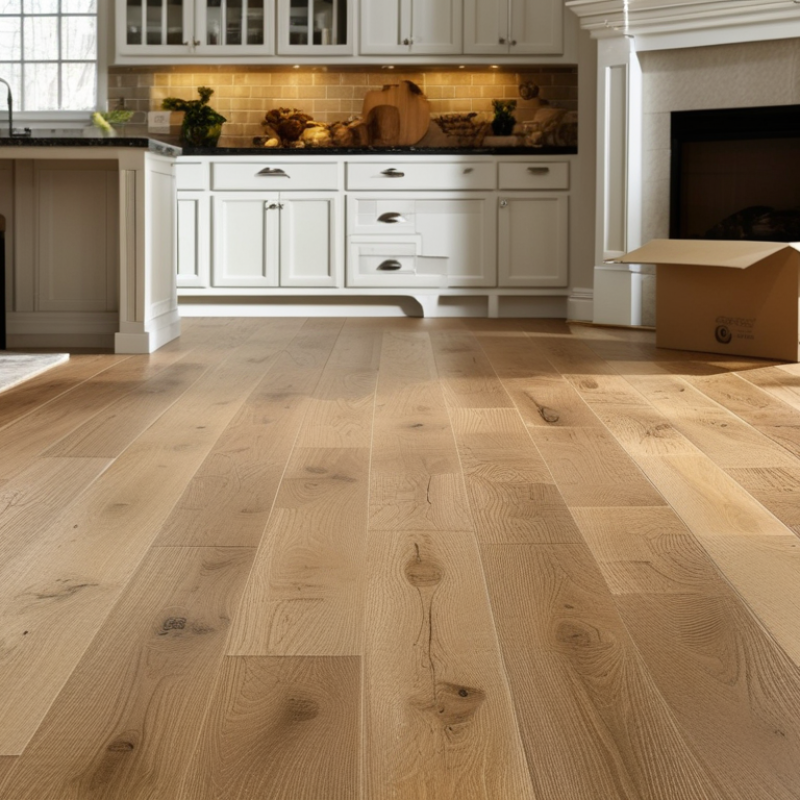
Tip: Define the room before choosing the oak look. Measure length and width in several places, not just once. Add doorways, closets, alcoves, and a small waste allowance. I once measured only the visible floor. That shortcut was costly. For online orders, compare the product’s plank dimensions with your room drawing. A warm oak tone can also appear darker in rooms with limited daylight.
Tip: Match the floor to real room conditions. Check moisture exposure, subfloor condition, sunlight, pets, and rolling furniture. Bathrooms, basements, and entryways need careful moisture planning. Ask for the product’s installation instructions, wear-layer thickness, click-system details, and required expansion gaps. Do not assume every SPC floor suits every room. The manufacturer’s technical sheet matters more than attractive photos.
According to Grand View Research’s 2024 resilient flooring analysis, the global market was valued at approximately USD 42 billion in 2023, with continued growth expected through 2030. More choices also mean more specification mistakes. The Resilient Floor Covering Institute recommends following site preparation and installation guidance closely. Check whether your subfloor is flat, dry, and structurally sound. Use sample boards near windows and under evening lighting. Oak patterns may repeat visibly across a large open space. That detail is easy to miss online. A room-by-room checklist, sample inspection, and measured waste allowance make the purchase more reliable.
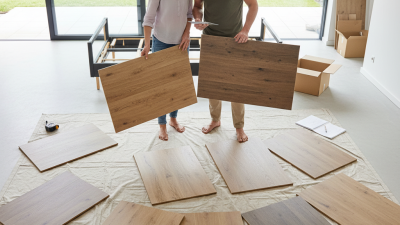
7 Tips for Buying Oak SPC Flooring Online?
Check the core first. SPC means stone plastic composite, not solid stone. Compare total thickness, core thickness, and locking profile. A thicker board is not automatically stronger. Ask for a product data sheet and a cross-section photo. ISO 10582 provides performance classifications for PVC floor coverings, but it does not guarantee every online listing. Confirm dimensional stability and installation temperature limits.
Wear layers need careful reading. A 20-mil layer equals about 0.5 millimeters. That suits many busy residential rooms, while lighter use may need less. Do not compare “commercial grade” wording without test results. ASTM F3261 covers luxury vinyl tile specifications, including wear and performance requirements. Request abrasion results, warranty terms, and batch details. Check the actual measurement. Marketing numbers can look impressive.
Surface finish affects daily maintenance. A low-gloss urethane or UV-cured coating usually hides footprints better than a mirror finish. Embossed oak grain should align with the printed pattern and feel natural under bare feet. Grand View Research’s 2024 luxury vinyl flooring report identifies residential use as the leading application segment. That makes comfort and cleaning important. Still, online photos distort color and texture. Order a sample, place it beside a window, and inspect the edge. I once trusted a screen image too much. The floor looked warmer in person.
| Tip | Data Dimension | What to Check Online | Practical Benchmark | Why It Matters | Verification Question |
|---|---|---|---|---|---|
| 1. Check the SPC Core | Core composition and density | Look for a clearly stated stone-plastic composite core, product weight per square metre, technical data sheet, and cross-section photos. | A rigid, uniform core with no visible voids, excessive foaming, or uneven edges. | A dense and consistent core generally improves dimensional stability, indentation resistance, and locking-joint performance. | Can the seller provide a technical data sheet and a close-up photo of the cut edge? |
| 2. Compare Wear-Layer Thickness | Transparent protective layer | Confirm the wear-layer thickness in millimetres rather than relying only on terms such as “commercial” or “heavy duty.” | About 0.20 mm for light residential use; about 0.30 mm for typical busy homes; 0.50 mm for heavier residential or light commercial use. | The wear layer protects the printed oak design from abrasion, scuffing, and everyday traffic. A thicker layer is not a substitute for a sound core or proper installation. | Is the stated value the wear layer only, excluding the printed film and attached underlay? |
| 3. Review the Surface Finish | Texture, coating, and appearance | Check whether the surface uses a UV-cured coating, embossed-in-register texture, brushed texture, or a simple embossed finish. | Texture should follow the oak grain pattern, with a low-gloss finish if a more natural appearance and reduced reflection are preferred. | Surface texture affects visual realism, touch, glare, and the visibility of minor dust or scratches. It does not by itself determine waterproof performance. | Can the seller send a close-up image taken in daylight and identify the surface coating and texture method? |
| 4. Confirm Total Thickness | Board thickness and attached underlay | Separate the SPC board thickness from the thickness of any attached foam underlay. Check the product specification, not only the listing headline. | Common SPC boards are approximately 4–6 mm thick, with some products adding a thin attached underlay. | Thickness influences joint stability, transition heights, impact feel, and compatibility with doors and existing floors. More thickness does not automatically mean better quality. | What are the board thickness, underlay thickness, plank dimensions, and total installed height? |
| 5. Inspect Plank Dimensions and Locking Joints | Plank size, edge precision, and installation system | Review plank length and width, locking-profile images, edge tolerances, installation instructions, and the recommended subfloor flatness. | Edges should be straight, the click profile should be clean and continuous, and the instructions should specify a flat, dry, sound subfloor. | Accurate dimensions and undamaged joints help reduce gapping, lipping, movement, and installation waste. | Are spare planks recommended, and what subfloor flatness tolerance does the installation guide require? |
| 6. Verify Water and Slip Performance | Water resistance, seams, and slip rating | Look for test methods, classification details, installation conditions, and guidance for wet areas. Check whether the claim applies to the plank or the complete floor system. | SPC itself is water-resistant, but perimeter gaps, joints, transitions, and the subfloor still require correct installation and maintenance. | Water can enter through poorly fitted joints or unsealed perimeter areas. Slip performance depends on the tested surface and should not be inferred from “waterproof” wording. | Which standard or test report supports the water-resistance and slip-performance claims? |
| 7. Check Samples, Documents, and Landed Cost | Color consistency, compliance, quantity, and delivery | Order a physical sample, compare batch or shade information, review emissions documentation, calculate cartons required, and include shipping, tax, trims, and waste. | Add roughly 5–10% extra material for ordinary straight layouts; allow more for angled layouts or rooms with complex cuts. | Online images can differ from real color and texture. Extra material helps cover cutting waste and future repairs, while documents provide evidence for emissions and performance claims. | Does the quoted price include delivery, accessories, taxes, sample fees, and the return policy for unopened cartons? |
Note: Product specifications and installation requirements vary by manufacturer. Always compare the technical data sheet, test reports, installation instructions, and local building requirements before purchasing.
Oak SPC flooring can look convincingly natural, but screen images often soften important differences. Compare the oak pattern first. Cathedral grain creates a lively, traditional floor, while straight grain looks calmer and more modern. Random plank printing usually feels more authentic than repeated knots. Check the product’s high-resolution images at 100% zoom. Look for recurring marks across several planks. That repetition is easy to miss.
Color needs equal attention. Warm honey oak adds comfort to north-facing rooms, while pale greige oak reflects more light. Ask for a physical sample beside your walls and furniture. Online white balance can distort undertones. Texture matters under bare feet. Embossed-in-register surfaces align raised texture with printed grain, improving realism and traction. A smooth finish cleans easily, but may show dust and scratches sooner.
The U.S. market report from Floor Covering Weekly identifies resilient flooring as a major residential category, reflecting strong consumer demand for practical, water-resistant surfaces. Still, popularity is not proof of quality.
Measure plank dimensions carefully. Wider planks can make a small room feel less busy, but uneven subfloors may reveal movement more clearly. Longer planks reduce visible joints. Check thickness, wear-layer measurement, click-lock design, and stated installation tolerance.
Grand View Research estimated the global luxury vinyl flooring market at approximately US$25 billion in 2023, with continued growth projected through 2030. SPC sits within this broader resilient category. Do not treat every online specification as equally reliable.
I once preferred the widest plank, then noticed its pattern repeated too often. That changed my choice.
Check the wear layer, total thickness, core density, locking system, plank dimensions, and installation method. Oak patterns can look similar online, but printed texture and embossing may differ sharply. Grand View Research valued the global luxury vinyl flooring market at about $24 billion in 2023. That growth brings more choices, but also more inconsistent specifications.
Examine it beside your wall paint and furniture during daylight. Check the surface texture, edge profile, and color changes across several planks. Ask whether the sample represents the current production batch. My sample looked warmer than the installed floor in one project. I should have checked it under evening lighting.
Calculate the price per square meter, including underlay, trims, delivery, taxes, and waste. The National Wood Flooring Association commonly recommends adding extra material for cutting, although the exact allowance depends on room shape. A cheap listing may become expensive after shipping.
Confirm delivery time, damaged-carton procedures, replacement rules, and who pays return freight. Inspect every carton before installation, then photograph dents and broken corners immediately.
Reports from recognized laboratories are more useful than vague claims. Product pages can be incomplete. Ask questions before payment.
7 Tips for Buying Oak SPC Flooring Online?
Tip 1: Review the seller’s reputation before comparing prices. Read recent customer feedback, not only selected testimonials. Look for comments about color accuracy, delivery damage, and response times. A reliable seller should provide a physical address, clear contact details, and detailed product information. I once focused too much on price and ignored vague answers about stock. That was a mistake.
Tip 2: Examine the warranty terms carefully. Confirm coverage for wear, moisture damage, locking joints, and manufacturing defects. Check the warranty period and any exclusions involving subfloor moisture or improper installation. Ask whether labor costs are included. Keep invoices, photographs, and installation records. Small details matter. A long warranty means little if the claim process is unclear.
Tip 3: Confirm installation support before placing an order. Professional guidance can prevent uneven seams, expansion problems, and wasted boards. Ask whether the seller provides an installation guide, maintenance instructions, or technical consultation. Verify recommended tools and subfloor requirements. Oak SPC flooring may look forgiving, but poor preparation can create movement and noise. I would also request sample pieces, because online lighting can distort the flooring’s tone. Support should continue after payment, not disappear once the delivery arrives.
Use this seven-point verification checklist to compare online flooring offers. A higher score indicates more evidence to verify before placing an order.
Focus on measurable details such as wear-layer thickness, warranty coverage, return conditions, subfloor requirements, delivery costs, and installation guidance.