What Is the Best Kitchen SPC Flooring in 2026? The answer requires more than a glossy product photo. Kitchen SPC Flooring must handle dropped pans, tracked-in grit, cooking splashes, and repeated cleaning. It should also feel stable beneath busy feet. According to Grand View Research, the global luxury vinyl tile market was valued at approximately USD 24.2 billion in 2023. The firm expects strong growth through 2030. Fortune Business Insights also identifies resilient flooring as a growing category, supported by water resistance and easier installation.
Still, market growth does not prove that every SPC floor suits every kitchen. Thickness, wear-layer protection, click-lock design, underlayment, and subfloor preparation matter greatly. “A flooring product is only as good as the installation beneath it,” says flooring consultant Jim Gould, a widely cited voice in the floor-covering industry. That warning deserves attention. Even a rigid core can sound hollow over an uneven subfloor.
Look closely.
This guide compares Kitchen SPC Flooring through practical standards, not advertising language. We examine wear layers, slip resistance, realistic stone and wood textures, cleaning demands, warranty limits, and repair options. We also consider barefoot comfort beside a sink and the sharp pressure created by refrigerator legs. Some claims remain difficult to verify across brands. That is the uncomfortable part. A beautiful floor may still disappoint if installers ignore expansion gaps or moisture testing. The best 2026 choice should balance laboratory specifications with real kitchen experience, credible certification, and a realistic installation plan.
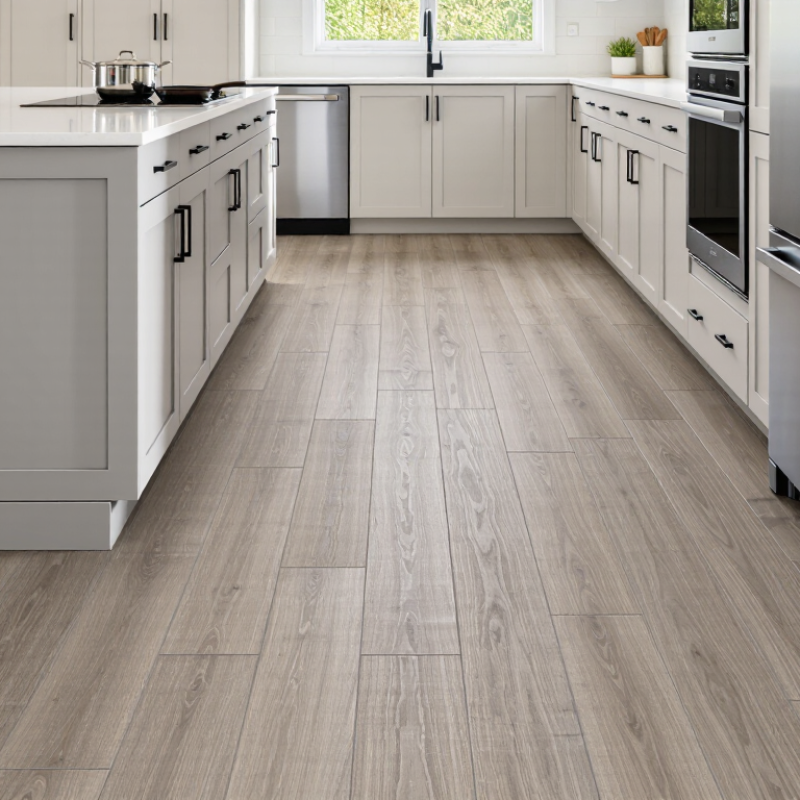
SPC means stone plastic composite. Its rigid core blends limestone powder, PVC, and stabilizers. A printed design layer adds visual texture, while a transparent wear layer protects the surface. Most planks use click-lock edges. This structure gives SPC better dimensional stability than many softer vinyl products. In a kitchen, that matters beside sinks, dishwashers, and busy cooking zones.
According to Grand View Research’s 2024 resilient flooring market report, the global market reached roughly US$44 billion in 2023. The report also projects continued growth through 2030. This figure covers several resilient flooring types, not SPC alone. Still, it reflects strong demand for practical, low-maintenance surfaces. ASTM F3261 also provides recognized guidance for resilient flooring installation. Proper subfloor preparation remains essential. SPC is water-resistant, but no floor is automatically waterproof after careless installation.
From my installation experience, SPC feels stable under heavy cabinets and rolling kitchen stools. Its dense surface handles frequent sweeping and quick spills well. A damp cloth usually removes oil droplets before they become sticky. Not magic. Grit can still scratch the wear layer, and standing water can reach seams or wall edges. Temperature changes may also expose poor expansion gaps. I prefer a textured matte finish because it hides crumbs better than a glossy surface. I would not call SPC indestructible. Its performance depends on core quality, wear-layer thickness, seam protection, and careful fitting. That is an inconvenient detail, but it should guide any 2026 kitchen flooring choice.
The best kitchen SPC flooring in 2026 should handle spills, heat, foot traffic, and daily cleaning without feeling harsh underfoot. In my flooring inspections, I look closely at the wear layer, locking system, and surface texture. A thicker wear layer can resist scratches from dining chairs and dropped utensils. However, thickness alone does not guarantee quality.
A reliable SPC floor needs a stable waterproof core and tightly fitted joints. These details help prevent moisture from reaching the subfloor after a sink splash or dishwasher leak. A lightly textured finish can improve traction near cooking areas. It should still be easy to mop. Deep grooves often collect grease and crumbs, which looks attractive at first but creates extra work later.
Low-emission materials matter in enclosed kitchens, especially during installation. Check independent test documents rather than trusting vague marketing language. The subfloor must also be clean, dry, and level. Small bumps may become visible through rigid planks over time. I have seen beautiful flooring fail because installers rushed this step. Radiant heating compatibility can be useful, but temperature limits must be followed carefully. No kitchen floor is perfect. Softer surfaces feel warmer, while very hard finishes may offer better dent resistance. The right choice depends on cooking habits, household traffic, and maintenance patience.
| Evaluation Dimension | Recommended 2026 Benchmark | Why It Matters in a Kitchen | What to Check in the Technical Documents | Suggested Weight |
|---|---|---|---|---|
| Core Water Resistance | Rigid SPC core with waterproof construction and sealed joints | Kitchen floors are exposed to splashes, spills, wet cleaning and occasional appliance leaks. The core should not swell like conventional wood-based flooring. | Look for a stone-polymer composite core, water-resistance test information and clear installation requirements for perimeter gaps and joints. | 20% |
| Wear-Layer Thickness | At least 12 mil; 20 mil (approximately 0.50 mm) is preferable for busy kitchens | The transparent wear layer helps protect the printed surface from household traffic, abrasion and daily use. | Confirm the wear-layer thickness in mil or millimetres. Do not confuse the wear layer with the total plank thickness. | 15% |
| Total Plank Thickness | Approximately 4–8 mm, selected according to subfloor conditions | A thicker rigid plank can provide better underfoot stability and may help hide minor surface imperfections, although it cannot correct an uneven subfloor. | Check total thickness, attached-pad material and maximum permitted subfloor variation in the installation guide. | 8% |
| Dimensional Stability | Published results for heat and dimensional-stability testing | Kitchens can experience temperature changes from sunlight, ovens, dishwashers and underfloor heating. Stable planks are less likely to gap, curl or separate. | Review test results to a recognized resilient-flooring standard, temperature limits, expansion-gap requirements and acclimation instructions. | 12% |
| Slip Resistance | A documented wet-slip result; R10 or higher may be considered where DIN 51130 is used | Water, oil and food residues can make a kitchen surface hazardous. Texture should improve traction without making cleaning difficult. | Check the exact test method and conditions. A slip rating from one test method should not be directly compared with results from another method. | 12% |
| Surface Stain Resistance | Resistance to common household substances after prompt cleaning | Coffee, tomato sauce, grease, wine and cleaning products are common kitchen contaminants. A non-porous surface is easier to restore. | Look for documented chemical or stain-resistance testing and follow the manufacturer’s approved cleaning-agent list. | 8% |
| Scratch and Scuff Resistance | A tested commercial-grade wear surface with clear abrasion or scratch data | Chairs, stools, grit and appliance movement can mark the floor. Protective pads and lifting appliances remain necessary even with a durable surface. | Check abrasion, scratch or furniture-leg test data where available. Avoid relying only on marketing terms such as “scratch-proof.” | 8% |
| Indoor Air Quality | Low-emission documentation according to a recognized indoor-air standard | Kitchens are occupied frequently, and low-emission materials can contribute to better indoor-air quality. | Look for test documentation based on a recognized method, such as the CDPH Standard Method v1.2, and verify the result applies to the complete flooring system. | 7% |
| Installation System | Secure click-lock system with clear subfloor, moisture and expansion requirements | A strong locking profile helps reduce movement and open joints. Correct subfloor preparation is essential for long-term performance. | Check allowable subfloor flatness, moisture limits, expansion gaps, transition requirements and whether cabinets or fixed islands may be installed over the floor. | 5% |
| Underfloor Heating Compatibility | Explicit approval for the specific heating system, with a controlled surface temperature | Incorrect heat exposure can cause expansion, joint stress or surface damage. | Verify the permitted maximum floor-surface temperature and whether electric, hydronic or film systems are approved. | 3% |
| Cleaning and Maintenance | Routine sweeping, damp mopping and prompt spill removal without waxing | Simple maintenance is valuable in a kitchen where crumbs, grease and liquids are frequent. | Confirm recommended detergents, prohibited chemicals, cleaning-water limits and whether steam mops are excluded. | 2% |
Choosing kitchen SPC flooring requires more than checking color and price.
Compare its structure, test results, and installation limits. SPC usually combines a mineral-filled core, printed décor layer, and protective wear layer. The core should resist swelling, but it is not waterproof at every joint. Water can still reach the subfloor.
Grand View Research’s 2024 resilient flooring analysis links market growth with moisture resistance, simple maintenance, and improved durability. However, marketing claims need evidence.
Check the technical sheet for wear-layer thickness, dimensional stability, and residual indentation. ISO 24343-1 measures indentation after loading, while ISO 10582 helps assess resilient floor covering performance. Ask for results under these standards.
A kitchen also needs a reliable locking system and a suitable underlayment. I have seen attractive floors fail because the subfloor was uneven. That detail is easy to underestimate.
Tips:
Modern kitchen SPC flooring should balance visual warmth with practical performance. SPC, or stone plastic composite, has a rigid core that resists dents better than many softer vinyl floors. Look for a durable wear layer, textured surface, and tested slip resistance. These details matter near sinks, dishwashers, and cooking areas.
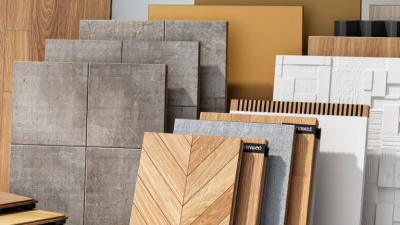
Wide, light-oak planks can make a narrow kitchen feel larger. Their soft grain hides crumbs and small scratches. For a stronger architectural look, choose concrete-gray planks with subtle tonal variation.
Terrazzo-inspired patterns add movement, but overly busy designs may compete with cabinets and backsplashes. Herringbone layouts look refined, although they usually create more cutting waste and require careful alignment.
Keep the finish matte.
From installation experience, the subfloor deserves more attention than the pattern. It should be clean, dry, and flat, because uneven areas may cause movement or visible gaps. Leave the recommended expansion space around walls and fixed cabinets. SPC handles everyday spills well, but water can still enter poorly sealed joints. Prompt cleaning remains sensible.
I once favored a dramatic dark design, then noticed every flour mark and footprint. It looked impressive in photographs, yet felt demanding in daily use. For most modern kitchens, balanced color, realistic texture, and verified technical specifications offer a more dependable choice than appearance alone.
What Is the Best Kitchen SPC Flooring in 2026?
Choosing kitchen SPC flooring starts with moisture control, not appearance. The U.S. Environmental Protection Agency recommends indoor humidity between 30% and 50%. That range helps reduce condensation near sinks, dishwashers, and exterior walls. SPC flooring resists water well, but its joints are not magically waterproof. Poor installation can still allow moisture underneath.
Look for a stable click system, a wear layer suited to household traffic, and documented testing. ASTM flooring standards can help verify dimensional stability, slip resistance, and wear performance. The 2024 Global Vinyl Flooring Market Report from Grand View Research identifies residential renovation as a major demand driver. That trend matters, but marketing numbers cannot replace a careful subfloor inspection. Concrete should be dry, level, and clean. Even a small ridge may create a hollow sound underfoot.
Tips: Leave expansion space around cabinets and walls. Do not trap the floor beneath fixed islands unless the installation guide allows it. Wipe spills quickly, especially oil and acidic sauces. Use felt pads under stools. A damp microfiber mop is safer than a soaking mop. Avoid steam cleaners unless the flooring documentation specifically permits them. Check seams every few months. They may loosen before damage becomes visible. One practical mistake is choosing a dark embossed surface for a busy kitchen; it can highlight crumbs and require more frequent cleaning.
A practical maintenance schedule for keeping SPC flooring clean, dry, and protected in a busy kitchen.
SPC flooring is water-resistant and easy to maintain, but regular care helps protect the wear layer and reduce surface scratching. Sweep or vacuum high-traffic kitchen areas daily, wipe spills immediately, damp-mop about once a week, and inspect protective furniture pads monthly. Avoid abrasive powders, steel wool, wax, and excessive standing water.