China Top 10 SPC Plank Flooring Suppliers in 2026?
China’s SPC plank flooring market is moving fast, but a polished sample does not tell the whole story. Grand View Research valued the global vinyl flooring market at about USD 25.6 billion in 2023 and projected continued growth through 2030. That figure covers vinyl flooring broadly, not SPC alone. Still, it signals why buyers are comparing rigid-core products, suppliers, and production capabilities more closely.
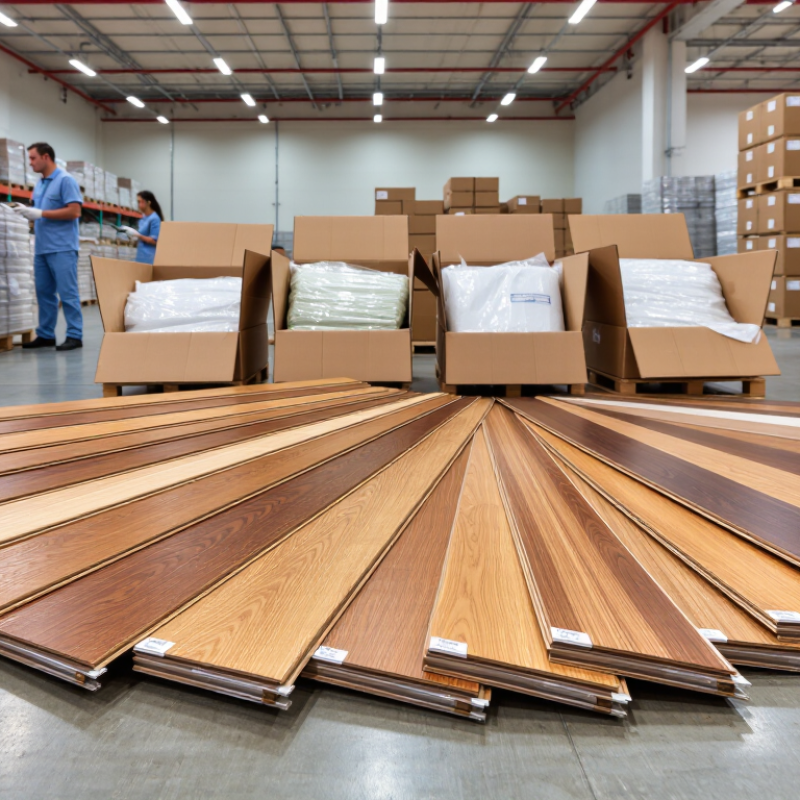
A credible supplier review needs more than attractive showroom boards. Check core density, wear-layer thickness, dimensional stability, locking-joint consistency, and published test documentation. Ask how batches are inspected, how cartons are protected against moisture, and whether specifications remain consistent across repeat orders. Small details matter. A chipped corner or uneven click joint can become obvious under bright warehouse lighting.
This 2026 guide examines ten China-based suppliers through product range, manufacturing evidence, export experience, and responsiveness to technical questions. It also leaves room for doubt: factory claims should be verified, and “waterproof” does not mean every installation or subfloor is risk-free. The supplied material contains no verifiable quotation from a named SPC flooring specialist, so attributing a quote here would be misleading. Buyers should confirm current certificates and product data directly before placing an order.
How SPC Plank Flooring Is Defined and Manufactured
SPC plank flooring is a rigid-core floor built around a composite of PVC resin and mineral filler, commonly limestone. The mineral content helps create a dense, dimensionally stable core, while polymers support flexibility and bonding. Exact formulas differ among manufacturers, so “SPC” alone does not guarantee identical performance. The core matters. A plank also typically includes a printed décor film, a transparent wear layer, and a protective surface coating. Together, these layers provide the wood- or stone-like appearance and help resist everyday scuffs and stains.
Manufacturing generally begins by blending the core ingredients with stabilizers and other additives. The mixture is heated and formed into a continuous sheet or core, then combined with the décor and wear layers using heat and pressure. After cooling, the material is cut into planks, and their edges are milled into click-lock profiles. Quality checks may measure thickness, plank dimensions, locking fit, and surface consistency. Details vary by production line. A neat surface does not tell the whole story; buyers should also consider clear product specifications and installation requirements. Even carefully made planks can perform poorly over an uneven subfloor.
How China’s SPC Flooring Supplier Market Is Assessed in 2026
How China’s SPC Flooring Supplier Market Is Assessed in 2026
Assessing China’s SPC plank suppliers in 2026 requires more than comparing catalog prices. Grand View Research valued the global luxury vinyl tile market at about US$25.6 billion in 2023 and projected 7.1% annual growth through 2030. This figure covers LVT broadly, not SPC alone, so it signals market momentum rather than proving any supplier’s sales or quality. That distinction matters. Buyers should request dated production records, independent test reports, and clear product specifications before treating a factory’s claims as evidence.
A practical assessment checks core thickness, wear-layer consistency, click-lock fit, and dimensional stability. Ask for batch-level measurements, not only a polished sample. Request test results for relevant emissions and performance standards, and verify that the report matches the product being quoted. Factory audits can also reveal how raw materials are stored and how defects are recorded. Look closely at lead-time history and the process for handling claims. Export volume can be useful context, but it cannot show whether one production line delivers consistent planks. My own screening would still have blind spots: reports may cover selected samples, while actual batch variation remains unseen. For a 2026 shortlist, score suppliers against the same specifications and retain a sample from each quoted batch.
China SPC Plank Flooring Suppliers: 2026 Assessment Framework
A proposed weighting model for assessing supplier capabilities—not a company ranking or the results of a market survey.
The criteria emphasize product performance and consistent quality, alongside compliance, production reliability, export capability, technical support, and commercial terms. Weights are editorial guidelines and should be adapted to each buyer’s requirements.
Profiles of Ten Leading Chinese SPC Plank Flooring Suppliers
China Top 10 SPC Plank Flooring Suppliers in 2026?
Choosing among Chinese SPC plank flooring suppliers takes more than comparing catalog photos. A useful supplier profile should cover factory capacity, core construction, wear-layer options, click-lock precision, and quality checks. A ten-supplier comparison can highlight different strengths, such as export experience, custom colors, reliable sampling, or support for large projects. Treat rankings carefully: without current test records and clear production details, “top ten” may be only a label. Details matter.
Ask about plank thickness, wear-layer measurements, and dimensional stability after temperature changes. Request recent test reports and samples from regular production, not only showroom pieces. Check whether the supplier explains batch controls and packaging methods. These small checks can prevent color shifts or chipped edges on arrival. I would not judge consistency from one sample alone; that may seem overly cautious, but it is worth remembering.
Tips: Compare like with like. Confirm specifications in writing, inspect the locking edges, and ask how defects are handled. A clear answer is useful. A vague promise is not.
How Suppliers Compare by Products, Production, and Export Services
Comparing China’s top SPC plank flooring suppliers in 2026 takes more than checking surface patterns and quoted prices. Product ranges may include wood-look planks, stone visuals, different wear-layer thicknesses, and attached underlayment. Ask for technical data and physical samples. Details matter. A sample can feel solid underfoot, yet it cannot show how a full installation will look across several rooms.
Production capability is another useful comparison point. Review stated output, quality-control steps, and how the supplier handles color consistency between batches. Ask how locking profiles are checked and what inspection records can be shared. Factory capacity sounds reassuring, but it matters less if communication becomes unclear when specifications change. That is easy to overlook. Buyers should confirm dimensions, packaging, tolerances, and order timelines in writing before approving production.
Export services can shape the real cost and reliability of an order. Compare support for carton labeling, pallet plans, shipping documents, and shipment updates. Ask who coordinates these details and when progress reports are provided. A low factory price may not include the same service level as another quote. I would not rank suppliers on price alone; that judgment can miss important differences. Check references where possible, request a clear quotation, and compare each supplier against the same product and shipping requirements.
How to Verify and Select a Supplier for Your Project
For a 2026 SPC plank order, a polished catalog is only a starting point. Ask each shortlisted supplier for current technical sheets, production-site details, and test reports tied to the exact product construction. Check whether the report issuer and testing methods can be independently confirmed. A certificate for a similar plank proves little. Request a physical sample from the intended production line, not just a showroom board. Inspect the locking edges under side light, measure plank thickness with calipers, and click several boards together on a flat floor. Look for chipped corners or uneven joints. Small defects matter.
Compare data on dimensional stability, wear layer, indentation, and emissions with your project needs and destination requirements. Ask how production batches are identified and what records accompany each shipment. Put tolerances, packaging, lead time, claim procedures, and warranty exclusions in writing before paying a deposit. A video call can show machinery and storage, but it cannot replace an independent inspection for a large order. A crisp sample can distract buyers from pallet protection; damaged cartons may erase a price advantage. Ask for references from projects with similar climate and foot traffic. Not every supplier will answer neatly. One unclear detail may have a reasonable explanation, so ask again and keep the response.



 Send Email
 whatsapp
 Whatsapp
