China Top SPC Staircase Manufacturers and Suppliers
China has become a major production base for resilient flooring, including stone plastic composite products. Grand View Research’s 2024 flooring market analysis identifies resilient flooring as a strong growth segment, supported by renovation demand and improved product performance. This trend gives Spc Staircase suppliers a wider commercial opportunity, from residential steps to hotels, offices, and retail projects.
SPC staircases combine a rigid mineral-polymer core, decorative film, and protective wear layer. Their practical appeal is clear. They resist moisture better than many wood-based alternatives. They also provide consistent colors across floors and stair treads. However, staircase performance depends on more than the panel itself. Buyers should examine slip resistance, dimensional stability, abrasion results, edge strength, and nosing design. ASTM and ISO testing frameworks can support more reliable comparisons, although standards may differ between destination markets.
China Top SPC Staircase Manufacturers and Suppliers should therefore be assessed through documented evidence, not attractive catalog images alone. Request technical datasheets, batch samples, test reports, installation guides, and production photographs. Check whether the supplier controls core density, surface wear, click profiles, and packaging quality. A stable factory should explain its quality process clearly. It should also identify limits, such as unsuitable subfloors or excessive moisture exposure. The market is not perfectly transparent. Some published claims remain difficult to verify. Independent inspections, traceable samples, and careful project references reduce that risk. For architects, distributors, and contractors, the best supplier is not always the cheapest. It is the partner that delivers repeatable dimensions, safe stair detailing, and dependable after-sales support.
China’s SPC Staircase Industry: 4–8 mm Core Thickness and Key Applications
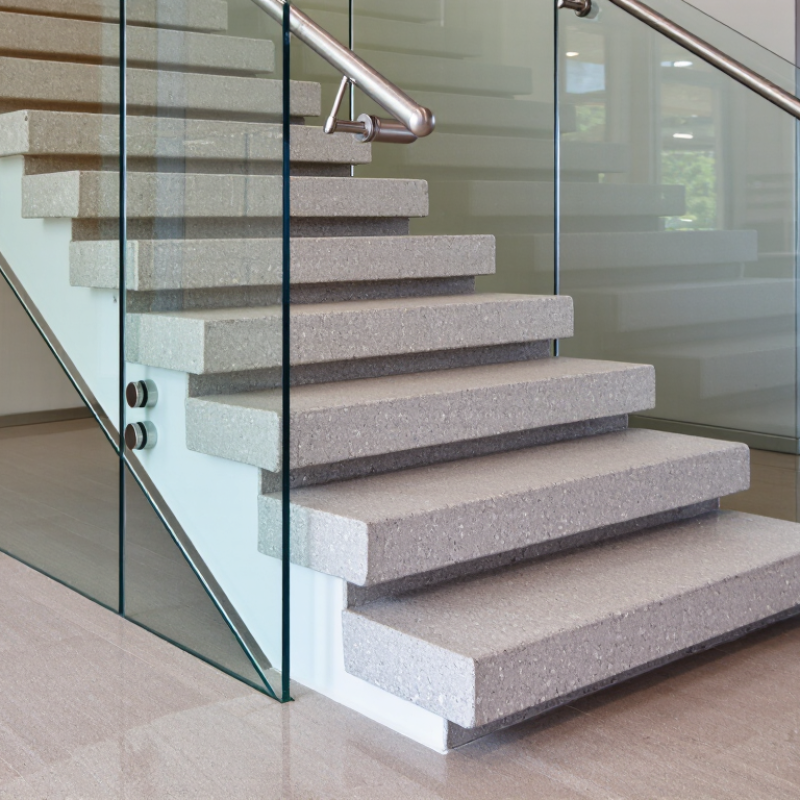
China’s SPC staircase industry commonly produces cores from 4 to 8 mm thick. These Stone Plastic Composite cores combine mineral filler with polymer materials. A 4 mm core suits lighter residential projects and renovation work. It reduces weight and simplifies cutting on site. The 6–8 mm range offers greater rigidity for busy stairways and larger platforms.
Thickness alone is not enough. Suppliers should verify wear-layer quality, surface texture, stair-nosing strength, and dimensional stability. Field checks often reveal gaps between laboratory samples and finished batches. A reliable manufacturer records core density, locking accuracy, and color consistency during production. Testing should also cover slip resistance, impact performance, moisture exposure, and emissions required by the destination market.
SPC staircases serve apartments, offices, hotels, retail interiors, and educational buildings. In a narrow apartment, a slim 4 mm profile can preserve tread space. In a hotel corridor, thicker panels may better handle luggage wheels and repeated foot traffic. Suppliers often provide matching risers, edge trims, and custom nosing profiles. Installation quality still matters. Uneven substrates, poor adhesive coverage, or rushed cutting can weaken an otherwise strong system. The industry is improving, but product claims should be checked against samples, test reports, and actual project conditions.
Supplier Evaluation Using EN 14041, ISO 10582, and Commercial Wear Classes
China Top SPC Staircase Manufacturers and Suppliers
Evaluating SPC staircase manufacturers requires more than comparing prices or surface photos. EN 14041 should be checked first, but it is not a complete quality certificate. Review the declaration of performance, fire classification, slip resistance, and emission information. Confirm that test documents match the actual SPC staircase structure, not only a similar flooring sample. Small differences in thickness can change performance.
ISO 10582 helps verify requirements for heterogeneous PVC floor coverings, including dimensions, wear layer properties, and product consistency. Ask suppliers for recent laboratory reports, production specifications, and random batch samples. Measure stair panels with calipers. Inspect edge cuts, locking accuracy, backing stability, and surface scratches under direct light. A good supplier should explain testing methods clearly, without hiding behind technical language.
Commercial wear classes provide another practical filter.
Classes 31 and 32 may suit moderate commercial areas, while Classes 33 and 34 are more appropriate for heavier traffic. However, a higher class does not automatically guarantee safer stairs. Stair edges face concentrated impact, repeated foot pressure, and possible moisture. Check slip performance, nosing design, adhesive compatibility, and installation guidance. In supplier audits, certificates often look impressive. The physical sample may still reveal weak corners or inconsistent color. That gap deserves attention. Not every document proves long-term staircase performance.
Comparing Custom Sizes, MOQ, Lead Times, Warranty, and Export Service Terms
China Top SPC Staircase Manufacturers and Suppliers
When sourcing SPC staircases, compare more than catalog photos and unit prices. Experienced buyers request drawings, surface samples, and installation details before placing an order. Custom sizes should include tread width, riser height, edge profile, color, and surface texture. Ask whether the supplier checks dimensional tolerance before packing. Small differences can complicate installation.
The cheapest quote can mislead. MOQ often changes with custom colors, molds, or special packaging. Confirm whether the quoted quantity applies to each design or the entire order. Lead times should separate sample approval, production, inspection, and shipping. Lead times matter. A reliable supplier provides a dated schedule and reports delays early. In practice, schedules sometimes slip because drawings change late. That risk deserves honest discussion.
Warranty terms need precise wording. Check coverage for delamination, cracking, fading, and fitting problems, plus the claim period and required evidence. Export service should cover pallet protection, carton markings, commercial invoices, packing lists, and destination-port documents. Clarify Incoterms, payment stages, loading photos, and who handles damaged cartons. Do not assume everything is included. A capable supplier can explain installation limits, maintenance needs, and regional climate concerns. References from similar overseas projects add useful evidence, but they should be verified independently.
China SPC Staircase Supplier Benchmark
Anonymous comparison of commonly published procurement terms for custom SPC staircases. Higher scores indicate greater buyer flexibility and service coverage.
Custom
Width, rise, tread and finish options
1 Set
Typical minimum order quantity
25–45 Days
Typical custom-production lead time
2–5 Years
Common product warranty range
4 Documents
Invoice, packing list, B/L and origin documents
The index is a practical purchasing comparison based on typical non-brand-specific export terms. Buyers should confirm final dimensions, material specifications, MOQ, production schedule, warranty exclusions and shipping documents in the written quotation.



 Send Email
 whatsapp
 Whatsapp
