Choosing SPC flooring is not just a color decision. A sample that looks warm under showroom lights may appear cooler beside your own windows. The core, surface finish, locking edges, and installation conditions all affect how the floor performs. Small details matter.
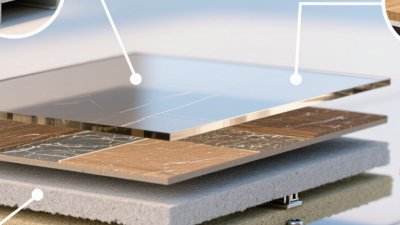
This guide explores seven practical checks for choosing four-layer SPC flooring, including wear-layer specifications, plank thickness, surface texture, and joint quality. The Four - Layer Spc Structure commonly combines a protective wear layer, decorative film, rigid core, and backing layer, though product designs can vary. Ask for clear product specifications rather than relying on a label alone. Compare samples in daylight, inspect the edges, and check whether the recommended underlay suits your subfloor. Looks can mislead.
Consider how the room is used. A busy hallway needs different wear protection from a quiet guest room, while uneven subfloors may require preparation before installation. Review the cleaning guidance, warranty terms, and fitting instructions, and confirm who is responsible for measuring and installation. These checks cannot guarantee a trouble-free floor, but they can reveal gaps in a product description before you buy. One detail is easy to miss: a thicker plank does not automatically mean better performance. Match the product to the room, and question claims that offer no measurable evidence. That takes a little care.
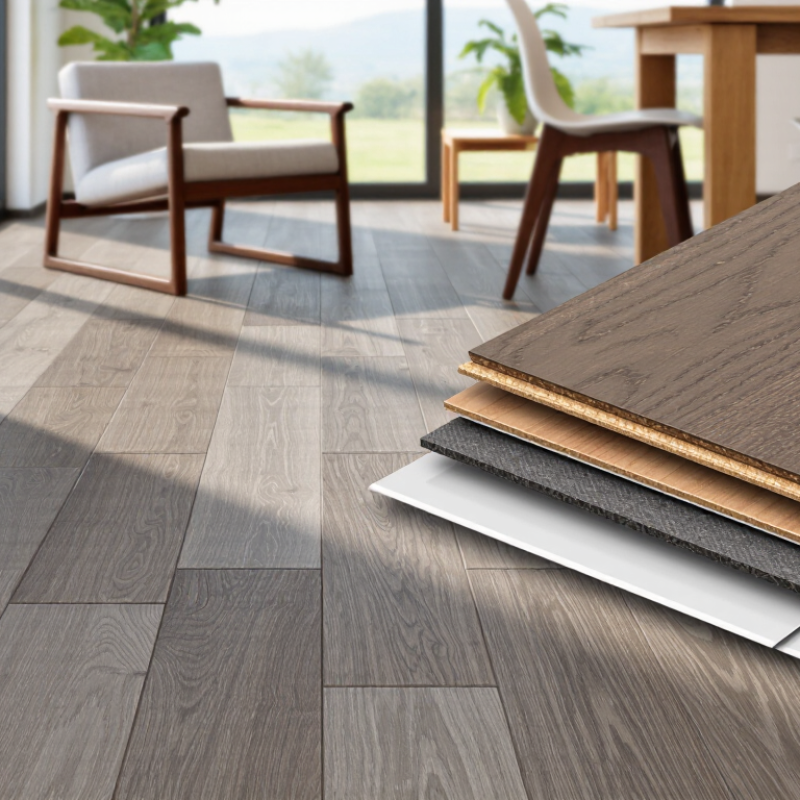
Map the stack before comparing samples. The UV coating is the thin top finish; it can help resist stains and fading, but it cannot prevent every scratch. The wear layer beneath it takes daily abrasion from shoes, grit, and chair legs. Check its thickness in mils, then ask what test supports the stated performance. Thicker is not automatically better. ASTM F3261-20 covers resilient flooring with a rigid polymeric core and sets product requirements and test methods; it does not make every surface finish equally durable. Small detail. Run a fingernail lightly across a sample, but treat that only as a quick check, not a lab test.
The décor film supplies the visible wood or stone pattern. Inspect several boards together: repeated knots or veins can make a floor look printed, not natural. Below it, the SPC core combines polymer and mineral filler. Core density and locking-edge quality matter when planks meet at doorways or around heavy furniture. I would also check product-specific installation instructions; a rigid core can still show problems over an uneven subfloor. For indoor emissions, the CDPH Standard Method v1.2 uses reference limits including 0.5 mg/m³ for TVOC and 9 µg/m³ for formaldehyde in chamber evaluations. Those figures describe test results, not a guarantee of room-air quality. Ask for the actual emissions documentation. Look closely.

The wear layer is the clear protective surface above the printed design. For many homes, 0.3 mm can suit bedrooms, living rooms, and lightly used hallways. Think about shoes, chair legs, and the grit tracked in near the door. Small details matter. A soft entry mat can reduce abrasive dirt, though it cannot prevent every mark.
A 0.5 mm layer may be a better fit for busy kitchens, rental properties, or homes with frequent visitors and pets. More thickness can provide added protection against everyday scuffing, but it does not make flooring scratch-proof. The core, surface finish, installation, and cleaning habits also affect performance. Check the manufacturer’s technical sheet and warranty terms; wear-layer recommendations can differ between products.
It is tempting to choose the thickest option and stop comparing. That is not always useful. Consider how each room is used, then compare samples under normal light. Look closely at the finish and ask how the product handles rolling chairs or regular foot traffic. I would not judge durability from thickness alone. A 0.3 mm floor in a quiet home may serve better than a poorly matched 0.5 mm product in a demanding space.
When comparing four-layer SPC flooring, separate core thickness from total plank thickness. A 5-millimeter plank does not necessarily have a 5-millimeter rigid core; attached underlayment and surface layers may contribute to the total. Ask for a layer-by-layer specification, including the core, wear layer, and any backing. Check that the figures match the exact product and do not rely on a sample label alone. Small details matter.
ASTM F3261 covers rigid-core flooring, but a reference to the standard is not proof that every performance claim has been independently verified. Request test documentation or a declaration identifying the product tested, its construction, and the standard edition used. Then compare those details with the flooring you plan to buy. A report for a similar model may not apply. Be cautious with broad claims such as “commercial grade” unless the seller explains the test basis and intended use. Core thickness can help with comparison, but it cannot predict comfort, sound, or durability by itself. I would not choose from one number alone. Check the installation instructions, too; an uneven subfloor can undermine a good specification.
| # | Selection Tip | What to Check | Evidence to Request | Why It Matters |
|---|---|---|---|---|
| 1 | Confirm the four-layer construction | Ask for a cross-section identifying each layer, such as the wear surface, décor film, rigid core, and backing or attached underlayment. Layer names and configurations can vary by product. | A product-specific construction diagram and a written layer-by-layer description. | “Four layer” is a product description, not a guarantee of one standardized layer arrangement. |
| 2 | Check core thickness separately | Compare the stated rigid-core thickness with the overall plank thickness. Confirm the measurement units and whether the figure includes attached backing or other layers. | A technical data sheet that reports core thickness and total thickness as separate measurements. | Total thickness alone does not show how thick the rigid core is. ASTM F3261 does not establish one universal core thickness for every product. |
| 3 | Evaluate the wear layer on its own | Verify the wear-layer thickness in millimeters or mils, and distinguish it from the total plank thickness. Ask what product-specific test or rating supports any durability claim. | A published wear-layer measurement and supporting test documentation, if performance claims are made. | Wear-layer thickness is only one factor in surface performance; it should not be treated as a substitute for documented test results. |
| 4 | Verify the ASTM F3261 claim | Check the exact standard designation and edition cited, the product or construction covered, and which applicable requirements were evaluated. | A test report or compliance statement identifying ASTM F3261, its edition, the tested product, and the relevant results. | ASTM F3261 is a specification for resilient flooring in modular format with a rigid polymeric core. A general reference to ASTM is not, by itself, proof of compliance. |
| 5 | Match performance claims to test results | For claims such as indentation resistance, dimensional stability, or chemical resistance, request the test method, result, and conditions rather than relying on broad marketing language. | Product-specific reports that identify the test method and measured outcome for each stated performance claim. | Results are meaningful only when the tested product and test conditions are clear and relevant to the claim. |
| 6 | Check installation limits and subfloor requirements | Review the installation instructions for subfloor flatness, moisture conditions, expansion allowances, permitted installation methods, and any restrictions on underlayment. | Current installation instructions and warranty terms for the exact flooring construction being considered. | Installation requirements vary by product. An attached pad does not automatically remove the need to follow subfloor preparation instructions. |
| 7 | Compare warranty coverage with the intended use | Check the warranty’s stated residential or commercial use, duration, exclusions, maintenance conditions, and process for reporting a claim. | The complete written warranty and care instructions, not just a summary or headline duration. | A warranty is governed by its written conditions and exclusions; a longer term does not alone establish better performance. |
Many SPC planks are listed at 4–6 mm thick, but that figure describes the whole plank, not its wear layer. Check both measurements before comparing products. A thicker plank may feel more substantial underfoot, yet it does not automatically resist scratches better. The wear layer and core construction matter too. Small detail, big difference.
ASTM F3261-20 is a technical specification for resilient flooring, while ASTM F970 sets out a test for residual indentation under static loads. These references help frame performance checks, but neither makes thickness alone a guarantee of durability. Ask for product-specific test results and confirm whether the stated thickness includes an attached backing. On a firm, level subfloor, a 4 mm plank may work well; an uneven base can make joints feel less secure, even with a thicker plank. That is easy to overlook.
Look closely at the installation notes. Some products permit an attached pad; others restrict extra underlayment. A sample placed on a hard, flat surface can reveal the plank’s feel, but it cannot predict every room. Check door clearance, transitions, and subfloor flatness before choosing. Measure twice. One caveat: product data sheets do not always present thickness and test results in the same format, so compare like with like.
A low-VOC claim is useful only when it can be checked. For four-layer SPC flooring, ask whether the exact product was evaluated through FloorScore or the CDPH Standard Method. These programs assess chemical emissions under controlled conditions. They offer stronger evidence than a vague “eco-friendly” statement.
Ask for the report. Check that its product name, construction, and test date match the flooring you plan to buy. A report for a similar color or an older formulation may not describe the current product. Look for clear test results and the standard used, rather than relying on a certificate image alone. That detail matters.
Testing does not mean zero emissions. It indicates performance under specified conditions, which may differ from a real room with closed windows, fresh paint, and new furniture. Consider underlayment and installation materials too, since they can affect indoor air quality. A faint smell is not a dependable test. I would still want better batch-level traceability; some documents leave that unclear. Ask the supplier to confirm that the tested product matches the cartons being shipped.