
INQUIRY
Leave Your Message

Top Interior Wall Panel Manufacturers in China?

Choosing among the top interior wall panel manufacturers in China takes more than comparing glossy catalog photos. A Wall Panel For Interior project must suit the room, the installation method, and the daily wear the surface will face. A hotel corridor needs panels that handle frequent contact. A living room may call for a warmer finish, softer texture, or careful acoustic planning. Samples help. So do clear product specifications.

Architect Frank Lloyd Wright wrote, “Form and function should be one, joined in a spiritual union.” That principle offers a useful lens for judging panel makers: attractive finishes matter, but so do substrate quality, edge details, dimensional consistency, and installation guidance. This guide looks at manufacturers through those practical considerations, along with customization options, production capacity, quality documentation, and communication during ordering. Details matter.

No supplier is right for every project. A factory’s strengths may lie in decorative variety, while another may be better suited to repeat orders or project-specific dimensions. Buyers should request current samples and confirm specifications directly; a website rarely tells the whole story. Even a careful comparison can miss something. Finish variation, lead times, and local installation conditions deserve a second look before a decision is made. The manufacturers featured here provide a starting point for research, not a substitute for checking samples, references, and project requirements.
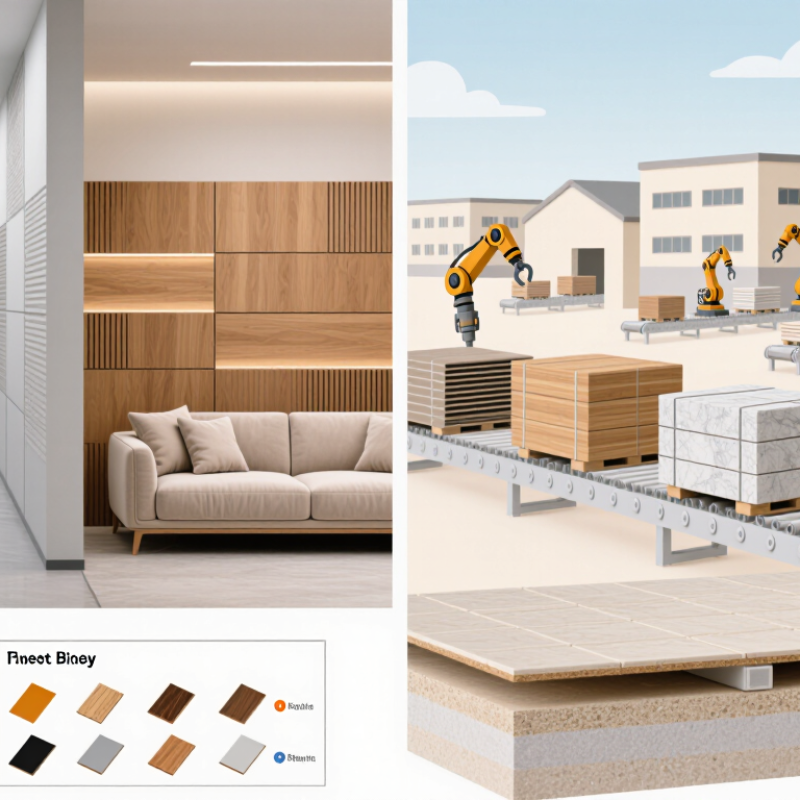
Top Interior Wall Panel Manufacturers in China?

How China’s Interior Wall Panel Market Is Divided by Material and Application

China’s interior wall panel market is best understood by material and use, rather than by a single ranking of manufacturers. PVC panels are common in wet areas because their surfaces are easy to wipe clean. Wood-plastic composite panels offer a warmer look for corridors and living spaces. Bamboo-fiber and mineral-based boards provide varied textures and may support acoustic design. Solid wood and veneer suit premium interiors, but require careful moisture management. The categories overlap. A “green” label alone tells little.

Application often determines the final specification. Apartments may use lightweight panels over uneven walls, especially when renovation time is limited. Hotels and offices tend to prioritize consistent color, replaceable sections, and resistance to frequent cleaning. In restaurants, entrance halls, and retail spaces, impact resistance can matter more than a decorative sample suggests. Check the panel core, surface finish, installation method, and test documents together. A glossy board may look convincing under showroom lights, yet show scratches in daily use. Acoustic performance also depends on the full wall assembly, not just the panel. Details get missed. Chinese suppliers serve these varied needs at different price and quality levels.

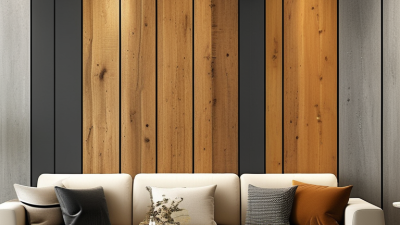
How to Rank Manufacturers by Production Capacity, Product Range, and Export Reach

Top Interior Wall Panel Manufacturers in China?

Rank manufacturers with evidence, not showroom claims. China’s National Bureau of Statistics reported construction output of RMB 31.59 trillion in 2023, up 5.8% year over year. That scale signals a broad building market, but it does not prove any factory’s panel capacity. Ask for monthly output by product, operating shifts, line count, and recent utilization. Then compare these figures with audited records and sample lead times. A large number alone proves little.

Product range needs the same scrutiny. Check panel thickness, core material, surface finish, fire-test documentation, and matching trims. Request samples from different production batches; color and edge alignment can vary. For export reach, use UN Comtrade or ITC Trade Map shipment data as a cross-check, while matching products carefully to customs codes. Wall panels made from different materials may fall under different classifications. Compare shipment history, destination markets, and export packaging, not just a list of claimed countries. Small detail. Ask for pallet photos and moisture-protection specifications. No ranking is perfect; capacity can change, and trade data may not identify a specific factory.

Top Interior Wall Panel Manufacturers in China? — How to Rank Manufacturers by Production Capacity, Product Range, and Export Reach

Evidence-based comparison framework for assessing manufacturers. No company-level rankings or unverified performance figures are presented.

Manufacturer Evaluation Scorecard — Suggested Weights and Verification Evidence
Rank Factor Suggested Weight What to Measure Evidence to Request or Check Scoring Guidance Manufacturer Score
Production Capacity 30% Annual output by panel type; number and type of production lines; shift pattern; current utilization; ability to handle repeat orders. Recent production records, line and facility audit, equipment list, capacity statement, and sample order schedule. Score documented, usable capacity and demonstrated delivery performance—not stated capacity alone. To be verified
Product Range 20% Available panel materials, finishes, dimensions, thicknesses, edge profiles, fire-performance options, and customization capability. Current product catalogue, technical data sheets, samples, test reports, and confirmation of which items are made in-house. Score the breadth of relevant, currently available products and the evidence supporting their specifications. To be verified
Export Reach 20% Documented export experience, destination-market coverage, shipment history, and ability to prepare destination-specific shipping documents. Redacted bills of lading or shipping records, export declarations where available, customer references, and document samples. Count only verifiable export activity; distinguish direct exports from domestic sales through trading companies. To be verified
Product Quality and Compliance 15% Consistency with declared specifications; relevant fire, emissions, durability, or other project requirements; quality-control procedures. Test reports from identifiable laboratories, certificates within their scope and validity, inspection records, and traceability documents. Score evidence that matches the exact product, configuration, and target-market requirement. To be verified
Lead Time and Order Fulfilment 10% Quoted production lead time, on-time delivery history, order flexibility, packaging suitability, and response to production changes. Recent order schedules, shipment records, packaging specifications, and references for comparable orders. Compare like-for-like orders and separate production time from transit time. To be verified
Environmental and Material Transparency 5% Disclosure of material composition, sourcing information, emissions-related documentation, and applicable environmental management practices. Material declarations, relevant environmental product documentation, supplier records, and certificates checked for scope and validity. Score current, product-relevant documentation rather than general environmental claims. To be verified
Total Suggested Weight 100% — Apply the same evidence requirements and scoring method to every manufacturer.

Scoring method: Rate each factor from 0 to 5, where 0 means no verifiable evidence and 5 means strong, current, independently checkable evidence. Calculate the weighted total as: factor score ÷ 5 × factor weight. Confirm all company-specific figures directly before making a purchasing decision.

Which Compliance Data Matter: ASTM E84 Class A Requires FSI 0–25 and SDI ≤450

When comparing interior wall panel manufacturers in China, request the actual ASTM E84 test report, not just a “Class A” claim. Class A corresponds to a flame spread index (FSI) of 0–25 and a smoke developed index (SDI) of 0–450. Both figures matter. A low FSI does not cancel an SDI above the stated limit. ASTM E84 measures surface burning under specified test conditions; it does not establish performance in every room or installation.

Check that the tested panel matches the product being quoted. Compare its thickness, surface finish, core, adhesive, and mounting method with your project specification. A report for a bare panel may not cover a finished assembly with a different backing or air gap.

Confirm the report number, test date, laboratory, and specimen description. Ask whether the laboratory’s scope covers the test method. One detail is easy to miss: “Class A” alone may hide which product configuration was tested. Even tidy paperwork can leave that question unanswered. A careful review may take longer, but it can prevent a costly mismatch.

Profiles of Leading Chinese Wall Panel Manufacturers and Their Core Products

Chinese wall-panel suppliers generally cluster around three product strengths. Decorative PVC and WPC producers offer lightweight boards with printed stone, wood-grain, or fabric finishes. Their panels suit quick interior upgrades, but buyers should check surface wear and edge quality against real samples. Mineral-fiber and fiber-cement makers focus on fire-conscious, moisture-tolerant interiors, often supplying plain or textured boards for commercial projects. Aluminum-panel specialists typically provide rigid, wipe-clean surfaces and custom sizes for corridors, lifts, and feature walls. Details matter.

A useful supplier profile includes its core material, panel thickness, finish options, and evidence of consistent quality. Ask for installation details, test reports, and a sample from the same production line as the quoted goods. The UNEP and Global Alliance for Buildings and Construction 2023 Global Status Report states that buildings accounted for 34% of global energy demand and 37% of energy- and process-related CO2 emissions in 2022. This is broader building-sector data, not a wall-panel comparison, but it reinforces the value of checking recycled content and product documentation. Catalog claims can blur distinctions; specifications and physical samples often tell a less polished, more useful story.

How Buyers Verify Samples, Certifications, Lead Times, and Installed Costs

When comparing interior wall panel manufacturers in China, buyers should request samples from the production line, not only showroom pieces. Check color consistency under warm and cool lighting, edge finish, surface texture, and how the panel handles cutting. A small test installation can reveal gaps or difficult joints. It is easy to overlook the fixing system.

Ask for current test reports and confirm that they cover the exact panel construction, thickness, and finish being quoted. Verify the testing laboratory, report date, and sample identification; a certificate for a similar product may not apply. For environmental claims, request product-specific documentation rather than broad marketing language. The 2023 Global Status Report for Buildings and Construction from UNEP and GlobalABC reports that the sector produced 37% of global energy- and process-related carbon emissions in 2022, making material choices worth checking carefully.

Lead times should be written as separate milestones: sample approval, production, inspection, and shipment. Confirm what happens if a color or batch fails inspection. Compare installed costs, not just panel prices. Include freight, packaging, trims, substrate preparation, fasteners, labor, cutting waste, and replacement stock. Ask for a room-level estimate using measured wall areas. One awkward detail remains: site conditions can change the final cost, so keep a contingency instead of trusting a perfectly neat quotation.