INQUIRY
Leave Your Message

What Is the Best Waterproof SPC Flooring in 2026?

Choosing the best Waterproof Spc Flooring in 2026 takes more than comparing colors or prices. A convincing sample may look like pale oak, yet its real value depends on the wear layer, locking profile, core quality, and installation details. Check the product specifications, warranty exclusions, and care instructions before buying. Small print matters.

Waterproof does not mean invulnerable. Water can still create problems if it seeps beneath poorly fitted edges or sits around damaged joints. Ask how the flooring performs in kitchens, bathrooms, and busy entryways. Then consider underfoot comfort, sound, surface texture, and whether the product suits your subfloor. Bring home a sample. View it in morning light and beside your cabinets.

For a trustworthy expert quotation, this article should use a verified flooring professional’s name and exact, sourced words. A useful question for that expert is whether the product’s construction and installation guidance support its waterproof claim in real homes. Avoid relying on a quote that cannot be checked. The best choice is not always the thickest plank or the lowest price. It is the flooring whose documented performance, installation requirements, and warranty fit your space. This guide compares those details so you can judge options with clear expectations—and spot claims that sound stronger than the evidence.
What Is the Best Waterproof SPC Flooring in 2026?

What SPC Flooring Is and How Its Waterproof Core Works

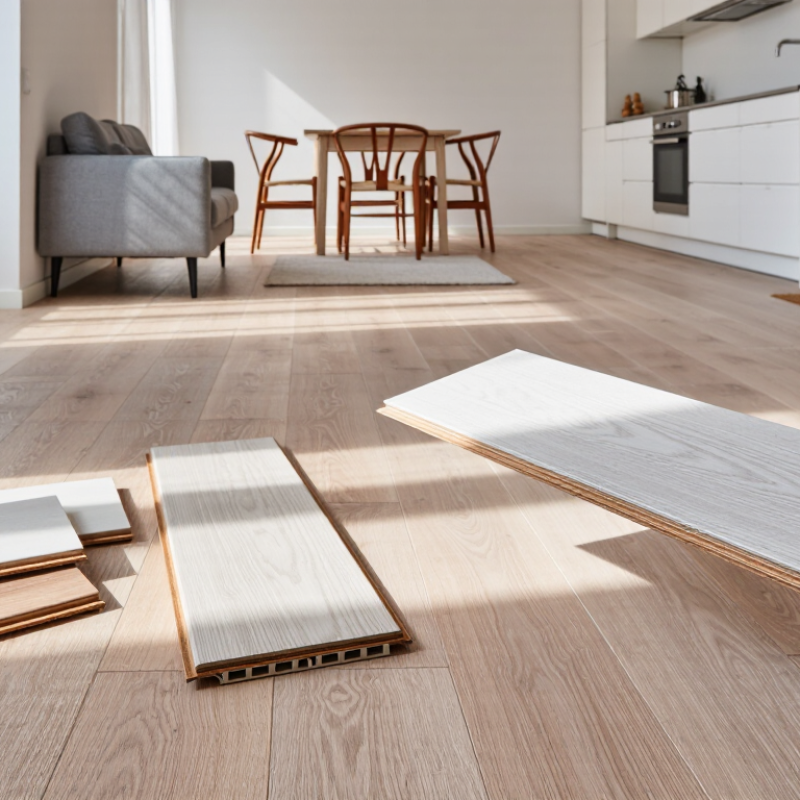
SPC flooring means stone plastic composite, a rigid vinyl floor built around a dense mineral-and-polymer core. The core does not absorb water like untreated wood. That is the key idea behind its waterproof reputation. A typical plank also has a printed design layer, a clear wear layer, and sometimes an attached underlay. Each layer has a job. The wear layer helps resist everyday scuffs; the core adds stability underfoot.

The core itself is waterproof, but the installed floor is not a sealed basin. Water can pass through gaps, poorly fitted edges, or openings around pipes. It may then sit beneath the planks, where trapped moisture can affect the subfloor or encourage odor. That distinction matters. A spill wiped up promptly is usually less concerning than a slow leak left unnoticed.

For a reliable installation, check that the subfloor is clean, flat, and dry, and follow the flooring maker’s instructions for expansion gaps and wet-area use. Click joints should meet evenly, without visible gaps. Small details matter. I would not assume every SPC product suits every bathroom; construction and installation guidance vary. The waterproof core is useful, but it cannot correct a damp subfloor or careless fitting.

Which Features Matter Most When Comparing SPC Flooring in 2026?

What Is the Best Waterproof SPC Flooring in 2026?
Which Features Matter Most When Comparing SPC Flooring in 2026?

“Waterproof” describes the planks, not necessarily the entire floor. Water can still reach the subfloor through edges, gaps, or poorly sealed transitions. Check the installation instructions for bathrooms, kitchens, and other spill-prone areas. Small details matter.

Compare the wear layer, core construction, and locking system together. A thicker wear layer may help resist scratches, but it cannot prevent every dent from heavy furniture. Core thickness affects feel and stability, though a thicker plank is not automatically better. Look for clear product specifications rather than relying on a single headline number. Ask whether the floor needs a separate underlayment, too.

Texture and finish deserve a hands-on check. A glossy sample may look striking under showroom lights but show dust or scuffs at home. Take samples into the room and view them beside your cabinets, in daylight and at night. Check the stated slip information and cleaning requirements, especially for busy households. I would also inspect several cartons for shade variation. That can be easy to overlook. Finally, compare warranty coverage with the actual installation conditions; exclusions can be more important than the headline term.

How SPC Flooring Options Differ in Durability, Comfort, and Design

SPC flooring’s rigid core resists dents better than many soft vinyl floors, but “waterproof” needs context. The planks resist water; seams, edges, and subfloors may not. ASTM F3261 sets requirements for rigid-core luxury vinyl flooring, but installation quality still matters. For busy rooms, compare wear-layer thickness and warranty terms. A thicker layer can help resist surface wear, though it cannot prevent every scratch from grit or chair legs.

Comfort depends on more than the plank. SPC often feels firm and can sound sharp under shoes. ASTM E492 measures impact sound through a floor-ceiling assembly, so an IIC result belongs to the tested assembly—not the plank alone. Ask for the exact test report, including underlayment and subfloor details. One trade-off is easy to miss: a softer pad may improve footfall, but it can affect stability if it is not approved for that flooring.

Design choices now include stone visuals, quiet wood grains, and textured finishes. Still, printed patterns can repeat; inspect several planks together under your room’s lighting. Grand View Research valued the global resilient flooring market at about $38.7 billion in 2023 and forecast 5.7% annual growth from 2024 to 2030. That signals expanding options, not proof that every product performs equally. I would not choose from a screen alone.

Where Waterproof SPC Flooring Performs Best—and Where It May Not

SPC flooring performs well in kitchens, laundry rooms, and busy entryways, where spills and muddy shoes are routine. Its rigid core resists water damage better than many wood-based floors, but “waterproof” usually describes the plank, not the whole room. Water can still pass through open joints, edges, or poorly sealed transitions. A leaking dishwasher left overnight is a different test from a few splashes.

It is less suitable for showers, rooms with floor drains, or spaces with persistent subfloor moisture. The U.S. Environmental Protection Agency’s The Inside Story: A Guide to Indoor Air Quality reports that indoor concentrations of some pollutants are often two to five times outdoor levels. That is a reason to check flooring emissions documentation, ventilate during installation, and follow curing instructions—not a claim that SPC itself causes poor air quality. The Resilient Floor Covering Institute’s FloorScore program evaluates VOC emissions against an established indoor-air testing method. In sunrooms, strong direct sunlight and heat can also stress floating floors; check the product’s temperature limits and expansion-gap requirements. I would not treat “waterproof” as worry-free. A small subfloor hump can still make a rigid plank click underfoot.

What Is the Best Waterproof SPC Flooring in 2026? — Where Waterproof SPC Flooring Performs Best—and Where It May Not

Room or Use Case Suitability Why SPC Can Work Well Where It May Not Perform Well Practical Checks Before Installation
Bathrooms and powder rooms Good for ordinary bathroom use The plank or tile material itself is generally water-resistant, so routine splashes and damp footwear are less likely to damage it than many wood-based floors. Water can still pass through seams, edges, or poorly sealed openings. Standing water and hidden leaks can damage the subfloor or surrounding construction. Follow the flooring maker’s wet-area instructions; seal edges where required, and promptly dry standing water.
Kitchens and laundry rooms Good for everyday spills A rigid core and water-resistant surface make SPC a practical choice in rooms where spills and frequent cleaning are common. It is not a substitute for fixing plumbing leaks. Water trapped beneath the floor can be difficult to detect and may affect the subfloor. Check appliance connections, floor flatness, expansion gaps, and the installation requirements around cabinets and fixed appliances.
Basements Conditionally suitable SPC does not absorb moisture into its core in the same way as many wood-based products, making it useful where minor humidity variation is a concern. It does not stop groundwater or resolve moisture pressure, drainage, or mold issues. A damp concrete slab can create problems beneath the flooring. Test and prepare the slab as required by the product instructions; address water intrusion and moisture problems before installation.
Living rooms and bedrooms Good when a hard surface is preferred SPC is easy to clean and its rigid core can help the floor feel stable over a properly prepared, flat subfloor. It can feel harder or cooler underfoot than carpet or some resilient floors. Sound transmission may be noticeable, especially in multi-unit buildings. Review acoustic requirements and use only underlayment approved for the specific flooring system.
Entryways and mudrooms Good with routine care The surface handles ordinary tracked-in moisture and is generally straightforward to wipe clean. Grit can scratch or wear the finish, while prolonged wetness at doors can reach joints and edges. Use entry mats, remove abrasive dirt, and keep wet footwear from leaving standing water on the floor.
Sunrooms and rooms with strong direct sunlight Use with caution SPC’s dimensional stability can be useful, but product performance depends on its stated temperature and installation limits. High temperatures and direct sunlight can contribute to expansion, gaps, discoloration, or other changes; not every product is approved for these conditions. Check the product’s temperature range, sunlight guidance, and requirements for windows, doors, and expansion space.
Garages, outdoor areas, and spaces exposed to extreme temperatures Often unsuitable unless specifically approved Some products are designed for particular demanding settings, but suitability cannot be assumed from the term “waterproof.” Vehicle loads, temperature extremes, direct weather, and uneven or wet slabs can exceed typical residential flooring limits. Use only a product whose installation guide explicitly permits the intended location and conditions.

How to choose: “Waterproof” usually describes the flooring material, not a guarantee that the complete floor system is watertight. Product construction, joint design, subfloor condition, installation, and exposure all matter. Confirm the current installation and warranty documents for the specific product before purchase.

How to Match SPC Flooring to Your Room, Budget, and Installation Needs

Choosing the best waterproof SPC flooring in 2026 starts with the room, not the color. In kitchens, mudrooms, and busy entryways, a textured wear layer can help hide scuffs and provide better grip. For bedrooms, a quieter surface and attached underlayment may matter more. Check the product’s water-resistance terms: a waterproof core does not make every seam or subfloor waterproof. I still find samples can mislead; a small square cannot show how a floor looks in afternoon glare.

Set a budget that includes more than planks. Underlayment, trims, floor preparation, and transition strips can add up. Measure twice. A low-cost carton may be poor value if an uneven floor needs extensive leveling or the locking edges are easily damaged. Compare wear-layer thickness, warranty exclusions, and approved installation locations instead of relying on a waterproof label alone.

DIY installation suits a clean, flat room and someone comfortable cutting around door jambs. Keep expansion gaps as specified, and acclimate planks only when the instructions require it. Small details matter. In a damp basement, confirm moisture conditions and subfloor requirements before buying. SPC can handle spills, but trapped moisture can still cause trouble. Ask for a sample, walk on it, and inspect the locking joint before deciding.

What Is the Best Waterproof SPC Flooring in 2026?

Match the wear layer to your room and expected traffic.

These are commonly available wear-layer thicknesses, measured in mils (1 mil = 0.001 inch). The room matches are general buying guidance, not a performance standard; check each product’s specifications and warranty. Waterproof SPC planks do not automatically make the entire floor or room waterproof.