INQUIRY
Leave Your Message

China Top 10 Rigid SPC Vinyl Flooring Manufacturers?

China has become a major sourcing base for Rigid SPC Vinyl Flooring, with manufacturers offering varied core constructions, surface finishes, and production capabilities. Yet a polished showroom sample tells only part of the story. Buyers also need to examine wear-layer thickness, dimensional stability, locking-system precision, and consistency between sample and shipment.

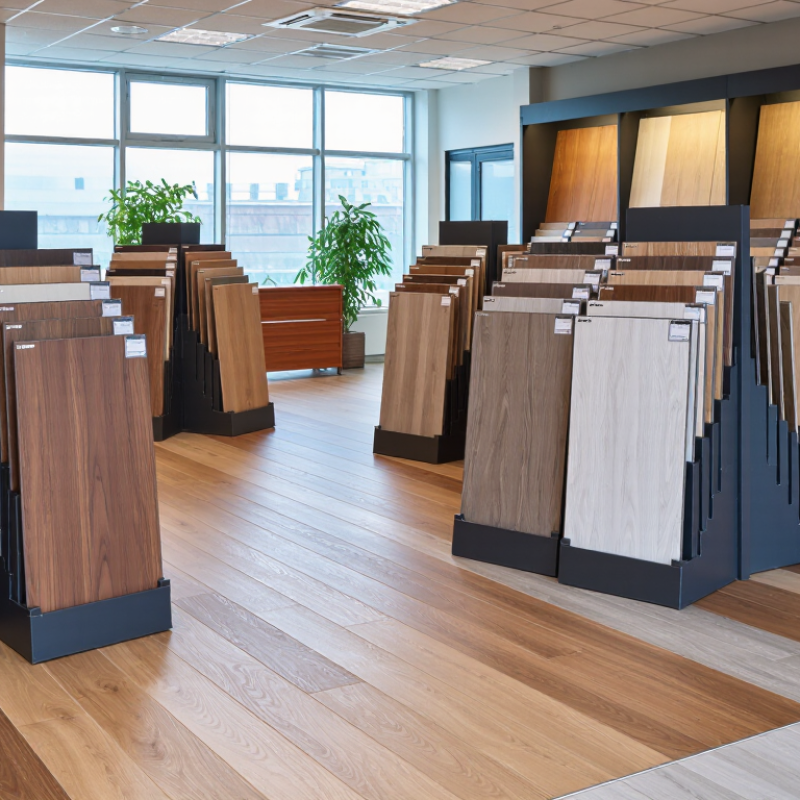
This guide compares ten Chinese manufacturers through practical, verifiable factors: product range, stated specifications, quality-control information, export experience, and available technical support. Details can change, so readers should confirm current product data directly with each supplier. A useful sample check is simple: inspect the plank edges, compare several pieces under the same light, and review technical documents before requesting a quotation.

The requested expert quotation cannot be reliably attributed because no source article, interview, or expert name was provided. Inventing a named specialist or quotation would undermine the credibility of this comparison. A verified expert comment can be added once its source is confirmed. For now, the guide focuses on evidence buyers can check themselves. That is less dramatic, but more useful.
China Top 10 Rigid SPC Vinyl Flooring Manufacturers?

What Rigid SPC Vinyl Flooring Is and How It Is Made

Rigid SPC vinyl flooring is a multi-layer resilient floor built around a stone-plastic-composite core. The core commonly combines PVC resin, calcium carbonate, stabilizers, and pigments. Above it sit a decorative print film, a clear wear layer, and a protective finish. Some products also include an attached backing pad. The layers are bonded under heat and pressure, while the core is typically formed through extrusion. Profiles are then cut, and locking edges are milled into each plank. Details vary by manufacturer.

The scale of the wider category is significant. Floor Covering News’ 2024 annual report estimated U.S. resilient flooring sales at about $7.9 billion in 2023. That figure covers resilient flooring broadly, not SPC alone. It helps explain why core consistency and wear-layer quality deserve close inspection. A thicker-looking plank is not automatically more durable. Check the published wear-layer measurement, surface finish, and installation requirements. The distinction is not always tidy. Some products differ in formulation, backing, or test methods, so comparisons need care. ASTM F3261 provides a standard specification for resilient flooring with rigid polymeric cores, offering buyers a useful reference point.

Rigid SPC Vinyl Flooring: Typical Core Formulation

Stone plastic composite (SPC) flooring has a rigid core made mainly from mineral filler and PVC. The chart shows an illustrative formulation; actual recipes vary by product and manufacturer.

How it is made: The ingredients are blended, heated and compounded, then formed into a rigid core. A decorative film and wear layer are typically laminated to the core; the board is cooled, cut, and milled into planks.

How China’s SPC Flooring Manufacturing Industry Is Organized

China’s SPC flooring industry is organized as a network of material suppliers, component makers, and finished-flooring factories. Upstream suppliers provide PVC resin, calcium carbonate, stabilizers, decorative films, and wear layers. Some factories purchase these inputs; others coordinate more of the supply chain themselves. This affects lead times and product consistency, but integration alone does not guarantee better flooring.

Production commonly links mixing, extrusion, cooling, cutting, surface treatment, and click-profile machining. Specialized workshops may handle printing films or tool maintenance, while larger plants often keep several steps on site. The details matter. A clean mixing area, stable board thickness, and neatly milled edges can reveal more than a polished showroom. Ask how batches are tracked and how locking strength, dimensional stability, and surface wear are checked. Records should be available, not just promised.

“Top 10” lists can be misleading. A supplier suited to a large commercial order may not fit a small custom run. Export experience, production capacity, and quality-control methods vary between factories. Even good systems can miss defects. Request recent test data, inspect samples from multiple cartons, and clarify who handles replacement claims. That takes time. It is still worth doing.

China Top 10 Rigid SPC Vinyl Flooring Manufacturers? - How China’s SPC Flooring Manufacturing Industry Is Organized

Industry-structure overview, not a verified ranking of individual companies. No company or brand data is included.

Industry Segment Typical Role Main Materials or Process How It Fits into the Supply Chain
1. Raw-material suppliers Supply the ingredients used in SPC flooring production. PVC resin, calcium carbonate, stabilizers, pigments, and processing additives. Upstream suppliers provide materials to flooring factories or compounders.
2. SPC compounders Prepare and blend formulations for the rigid core. Measured blending of PVC-based ingredients and mineral filler. May supply prepared compounds to flooring producers or operate within an integrated factory.
3. Core-board producers Form the rigid SPC core used in the flooring plank or tile. Core material is shaped using production equipment such as extrusion and calendering lines. The core can be made in-house or sourced by downstream flooring assemblers.
4. Decorative-film suppliers Produce the printed visual layer for the floor surface. Printed films commonly reproduce wood, stone, or other design patterns. Films are supplied to flooring factories for assembly with the core and wear layer.
5. Wear-layer and surface-treatment suppliers Provide surface layers or treatments that contribute to surface protection and appearance. Transparent wear layers and, depending on the product, UV-cured surface coatings. Materials are incorporated during lamination or surface-finishing operations.
6. Integrated flooring manufacturers Manage several production stages within one manufacturing operation. May combine core production, layer lamination, surface finishing, and plank processing. Greater process integration can reduce reliance on separate intermediate-product suppliers.
7. Lamination and finishing specialists Bond flooring layers and complete surface-finishing steps. Layer assembly, pressing or lamination, coating, and curing processes, as specified by the product design. Can operate as a dedicated production stage or as part of a full-service factory.
8. Click-profile and sizing processors Cut finished boards to size and machine edge profiles for installation systems. Precision cutting and edge milling; locking profiles depend on the product specification. Processed planks are checked for dimensional consistency before packing.
9. Contract and export-oriented producers Manufacture products to buyer specifications for domestic or overseas distribution. Specifications may cover dimensions, surface design, packaging, documentation, and testing requirements. Orders may be placed by importers, distributors, retailers, or project suppliers.
10. Testing, inspection, and logistics partners Support product checks, shipment preparation, and delivery. Checks can address dimensions, appearance, packaging, and buyer-specified product tests. Testing and compliance requirements vary by market, product, and customer; they should be verified for each order.

Note: Factory capabilities and supply-chain arrangements vary. This table describes common industry functions and does not identify or rank specific manufacturers.

Profiles of Ten Leading Chinese Rigid SPC Flooring Manufacturers

Rigid SPC flooring combines a limestone-filled core with a printed décor layer and protective wear surface. The ten manufacturer profiles should be read as a comparison of capabilities, not a permanent ranking. Useful details include core-density control, click-joint precision, wear-layer options, and consistency between sample boards and full production runs.

Grand View Research estimated the global vinyl flooring market at USD 25.6 billion in 2023, with projected annual growth of 6.1% from 2024 to 2030. This broad category includes products beyond SPC, so it indicates market direction rather than SPC demand alone. Details matter. For Chinese suppliers, buyers can compare export experience, laboratory testing, production capacity, and documented quality checks. Ask how they control plank thickness and locking-profile tolerances; small variations can complicate installation.

A useful profile also distinguishes in-house manufacturing from outsourced steps, such as printing or wear-layer production. Factory audits and recent test records offer stronger evidence than catalogue claims. One weakness in any “top ten” list is that public data rarely confirms comparable defect rates or delivery performance. Treat stated capacities as claims to verify, and request samples from current production batches. Not every line performs alike.

How to Compare Manufacturers by Quality, Capacity, and Certifications

Comparing rigid SPC suppliers takes more than checking a catalog or showroom sample. Grand View Research estimated the global flooring market at USD 388.24 billion in 2023, reflecting a crowded supply base. That figure covers all flooring, not SPC alone. Verify what each factory actually makes.

Request independent test reports for the exact product construction, including core thickness, wear layer, locking profile, and attached underlay. ASTM F3261 covers resilient flooring in modular formats; ask which relevant tests support the product’s claims. Compare dimensional stability, indentation resistance, and joint performance, not just wear-layer numbers. Small differences matter.

Capacity claims need evidence: monthly output by line, utilization, lead times, and recent delivery records. A live factory audit can help confirm equipment and production activity. For certifications, check the issuing body’s database for scope, site address, expiry, and product family. ISO 9001 concerns a quality-management system; it does not prove every plank performs well. A complete spreadsheet still cannot replace testing batches from actual production.

Key Factors for Choosing a Chinese SPC Flooring Supplier

China Top 10 Rigid SPC Vinyl Flooring Manufacturers?

Key Factors for Choosing a Chinese SPC Flooring Supplier

A supplier’s catalogue can look convincing; production consistency matters more. Ask for a current technical data sheet for the exact product and thickness. Check total thickness, wear-layer thickness, core composition, locking profile, and installation conditions. These details affect feel, joint strength, and suitability for busy rooms. Request test reports and confirm they match the product being quoted. Paperwork alone is not proof. For larger orders, consider a factory visit or live production audit.

Tips: Order samples from the production run, not just showroom boards. Compare color, edge fit, surface texture, and dimensions in normal room lighting. Ask how defects are recorded and what happens if a batch fails inspection. Keep the answer in writing.

Assess communication and logistics, too. A reliable contact should explain lead times, carton quantities, pallet protection, and replacement procedures clearly. Confirm packaging labels and loading photos before shipment; small errors can complicate receiving. Check warranty exclusions, especially those covering moisture, subfloor flatness, and temperature limits. A low quote may omit testing or after-sales support. It is not automatically a deal breaker, but it deserves another question. Even careful checks miss things. Keep a signed sample and inspection record for each order.