7 Tips for Choosing PVC Marble Wall Panels
Pvc Marble Wall Panels can bring the look of polished stone to a room without the weight or installation demands of natural marble. But attractive photographs show only part of the story. A panel’s thickness, surface finish, edge detail, and backing all affect how it performs after installation. A glossy sample may look elegant beneath showroom lights, yet reveal fingerprints beside a kitchen window. Small details matter.
“Choose for the room you have, not the photograph you admire,” says Daniel Mercer, a PVC wall-panel specification consultant. Use that advice as a starting point, not a substitute for checking product data. This guide explores seven practical considerations, including panel dimensions, pattern consistency, moisture exposure, cleaning needs, installation requirements, and supplier support. Compare samples in the actual room, beside the floor and cabinetry. Check whether the printed veining repeats across panels. Ask how corners, seams, and cut edges are finished. Then review the manufacturer’s care instructions and technical specifications.
There is no perfect panel for every space. A budget-friendly finish may suit a guest bathroom, while a busy family kitchen needs easier cleaning and dependable edge details. Even careful sample checks can miss how a full wall will look. That deserves a second look. The tips ahead help buyers ask sharper questions, compare options fairly, and avoid choosing solely by appearance.
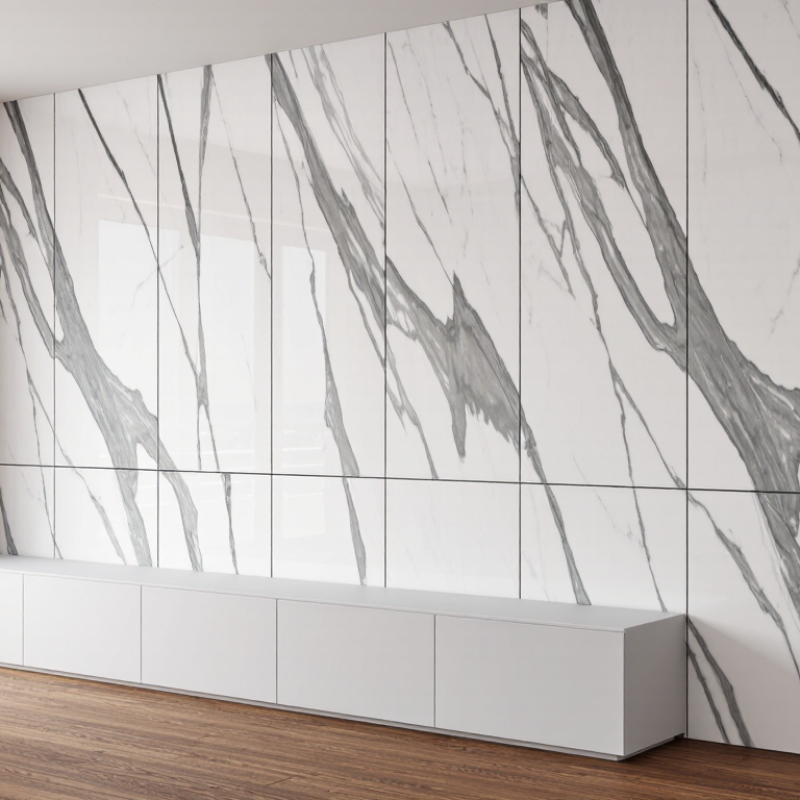
Assess the Room and Its Intended Use
Before choosing a pattern, note how the room is used each day. A bright bathroom with frequent showers needs different planning from a dry guest room. Check ventilation, splash zones, and whether any wall receives direct heat. PVC panels do not replace proper waterproofing behind them, so check installation instructions and prepare the surface as specified. Small details matter.
In a kitchen, measure the wall near the sink, countertop, and cooking area. Some PVC products may not be suitable for high temperatures, so verify product specifications before placing panels near heat. For a laundry room or hallway, consider how often the surface needs wiping and which cleaners are permitted. Pay attention to seams and corners, where grime can collect. A glossy marble effect can brighten a narrow room, but it may show fingerprints under side lighting.
Measure the full wall, including alcoves and areas around switches, before estimating panel quantities. In a busy family bathroom, easy cleaning may matter more than a dramatic pattern. In a quiet guest room, appearance may carry more weight. I would still order a sample if possible; a color that looks calm on a screen can feel surprisingly bold under warm bulbs. Room conditions vary, so check the panel’s care and fitting guidance before deciding.
7 Tips for Choosing PVC Marble Wall Panels - Assess the Room and Its Intended Use
| Room or Area |
Typical Conditions |
What to Assess |
Practical Selection Tip |
| Bathroom, outside the shower |
Frequent humidity and occasional splashes |
Ventilation, wall dryness, and the panel system's moisture guidance |
Use panels and compatible trims or sealants intended for humid interiors; keep the substrate sound and dry. |
| Shower or wet-room wall |
Direct, repeated water exposure |
Whether the specific panel system is approved for direct wet-area use, plus joint and edge details |
Do not assume every PVC panel is suitable for a shower. Follow the installation instructions for waterproofing, joints, and penetrations. |
| Kitchen backsplash |
Splashes, grease, cleaning, and possible heat near cooking appliances |
Distance from cooktops, temperature limits, and cleaning instructions |
Check the panel's heat limitations and local requirements. Use a suitable non-combustible surface where required near a heat source. |
| Laundry or utility room |
Occasional splashes, appliance vibration, and limited wall impact |
Wall flatness, access to plumbing, and the risk of knocks from equipment |
Choose a layout that allows access to service points, and protect exposed edges from impact. |
| Living room or bedroom feature wall |
Mostly dry conditions and regular indoor lighting |
Panel pattern scale, room dimensions, light reflection, and nearby windows |
Compare samples in the room's actual lighting; align the veining and joints with the wall layout. |
| Hallway or other high-traffic area |
Frequent contact from people, bags, and furniture |
Surface-cleaning guidance, scratch resistance information, and corner exposure |
Review care instructions and plan protective trims or corner details where bumps are likely. |
| Any room with an uneven or damaged wall |
Possible movement, moisture, loose coating, or surface irregularities |
Substrate stability, flatness, dampness, and the recommended fixing method |
Repair and prepare the wall as directed before installation. Panels should not be used to conceal unresolved leaks or structural damage. |
Check the product's technical and installation instructions for room suitability, heat limits, cleaning, and wet-area requirements before purchase.
Compare Panel Materials, Thickness, and Construction
Tip 1: Compare the panel material and surface layer, not just the marble pattern. PVC panels can vary in core formulation, surface film, and backing. Ask for a product sample and inspect it in daylight. Does the printed veining look sharp? Does the surface feel even, without bubbles or rough edges? A glossy finish may show fingerprints more clearly. Small details matter.
Tip 2: Check thickness alongside the panel’s intended use. Thicker panels may feel more rigid, but thickness alone does not guarantee durability. Look at the stated dimensions and handling guidance, then compare samples of similar size. Gently flex an offcut, if available. Notice whether it bends evenly or creases. This is not a lab test, but it can reveal a flimsy feel.
Tip 3: Inspect how each panel is built. Check the front layer, core, and rear surface, plus the joining edges. Tongue-and-groove or interlocking edges should meet neatly, without obvious gaps. Ask how the panels are fixed and whether the wall needs to be flat and dry. A detail buyers sometimes overlook: uneven walls can make even sturdy panels sit poorly. Compare installation instructions, too; I would not assume every panel uses the same adhesive or fitting method.
Choose a Marble Pattern, Color, and Panel Size
When choosing a marble pattern for PVC wall panels, look beyond the sample photograph.
Veins can appear bolder across a full wall, especially under bright bathroom lighting. Request a physical sample and hold it beside your flooring, vanity, or shower fixtures. Light changes everything. Warm bulbs can make a cool gray pattern look slightly blue, while daylight may reveal beige tones you missed in the store.
A small mismatch is easy to overlook on a sample, but harder to ignore across several panels. Choose a color that suits the room’s fixed features, not only current trends. White and soft gray can keep a compact space feeling open; deeper shades may add contrast but show water spots more readily. Panel size matters, too. Measure the wall height and width, then check where seams, corners, outlets, and plumbing will fall. Larger panels often mean fewer visible joins, yet they can be harder to handle in tight spaces. Check the manufacturer’s dimensions and installation guidance before ordering. It is tempting to choose the most dramatic veining, but a busy pattern may look crowded around shelves or fixtures. I would rather see a little less drama than a badly placed vein running through the center of a mirror.
Compare Installation Needs, Maintenance, and Total Cost
7 Tips for Choosing PVC Marble Wall Panels
Compare Installation Needs, Maintenance, and Total Cost
Choosing PVC marble wall panels takes more than picking a pattern that looks right under showroom lights. Check whether your wall is flat, dry, and clean; uneven plaster can make joints stand out. Measure around outlets, corners, and window trims before ordering. Small details matter. Ask how panels are fixed and whether the edges need separate trims.
Installation affects both budget and disruption. Some panels use adhesive, while others rely on interlocking edges or a supporting frame. The right method depends on the wall and panel instructions. Cutting around pipes can take longer than covering a clear, rectangular wall. Get an itemized quote that includes surface preparation, trims, adhesive, and waste. Not always. A low fitting price may leave important work out.
For maintenance, ask how the surface handles everyday splashes and which cleaners are suitable. A damp cloth may be enough for routine marks, but abrasive pads can dull the finish. Check seams carefully, especially near sinks or showers, and follow the manufacturer’s guidance for wet areas. A cheaper panel can cost more if it needs frequent repairs or replacement. Before comparing prices, include installation, cleaning needs, and likely upkeep over time. There is no perfect estimate; room conditions and workmanship can change the final cost.
7 Tips for Choosing PVC Marble Wall Panels
Compare installation needs, maintenance, and estimated total cost before choosing a wall finish.
Illustrative U.S. planning estimates for materials and professional installation, in USD per square foot. Actual prices vary by region, project size, wall preparation, and finish. Bars show the midpoint of each typical cost range.
What to Check Before You Buy
- Check that the panels suit the room and its moisture conditions.
- Inspect the wall for dampness, damage, and uneven areas before installation.
- Confirm whether the surface needs leveling, a backing board, or other preparation.
- Include trims, adhesives, sealants, and cutouts in the installation estimate.
- Ask how seams and corners will be finished to help prevent water entry.
- Choose a finish that can be cleaned with non-abrasive products.
- Compare the full installed cost and expected upkeep, not just the panel price.




 Send Email
 whatsapp
 Whatsapp
